

Things to Do in Langkawi: A Relaxed 5-Day Itinerary
Last Updated on 11/10/2026 by Mayi
Langkawi was the part of Malaysia I was most looking forward to. After several busy days in Kuala Lumpur I wanted somewhere slower and greener — sea views, jungle, a boat trip, and time to do very little.
What I had not reckoned on is how much bigger the island is than it looks on a map. The attractions are scattered around the coast, the weather turns without warning, and travelling with someone who cannot walk far means everything takes longer than the schedule says. Chasing every beach and viewpoint would have turned the holiday into work.
So we didn’t.

We planned one real thing a day and left the rest open for long breakfasts, swimming, an unplanned massage and the odd change of mind. We also split the five nights between Kuah and Burau Bay, which gave us two completely different versions of the island: a working town at one end, a resort surrounded by jungle and limestone at the other.
This is the trip we actually took. What worked, what disappointed me, and what I would do differently.
Honest trade-off: Langkawi rewards doing less. If your instinct is to fit in every beach, the island will beat you — the distances are longer than they look and the weather gets a vote.
Where is Langkawi?
Langkawi sits off the north-west coast of Peninsular Malaysia, close to the Thai border. It is an archipelago of 99 islands and a UNESCO Global Geopark, and Pulau Langkawi is the main one, where almost everyone stays.
The rock formations here are more than 550 million years old, which is the sort of number that stops meaning anything until you are looking up at them from a boat. It is not only a beach destination either. Away from the resorts there are small towns, night markets, local restaurants and a great deal of jungle.


Five days in Langkawi at a glance
| Day | Where | What we did |
|---|---|---|
| 1 | Kuah | Arrived, found lunch, Eagle Square, Kuah Night Market |
| 2 | North-east and Pantai Cenang | Kilim Geoforest Park mangrove tour, then an evening at Pantai Cenang |
| 3 | Kuah to Burau Bay | Breakfast near Maha Tower, rain, a massage, changed hotels |
| 4 | North-west Langkawi | Oriental Village, the SkyCab and the SkyBridge |
| 5 | Burau Bay | A slow morning by the pools, then the flight back to Kuala Lumpur |
Day 1 — Arriving, and an afternoon in Kuah
We flew in from Kuala Lumpur and went straight to the PureJoy Hotel in Kuah, the island’s main town and ferry port. Kuah has none of the beach-holiday feeling of Pantai Cenang. What it has is shops, restaurants and a glimpse of how people here actually live.

Our corner of it was not touristy in the least. Several restaurants near the hotel were shut when we arrived, so we crossed the road to the shopping centre, where several more were also shut. We eventually found Shizzle & Pot and stopped for a late lunch.
It was full of local families and groups of friends, and that was the point. We had noodles and fresh fruit juice for around 10 MYR each. Simple, cheap and exactly what we needed after a flight.

Eagle Square
A Grab took us to Eagle Square, or Dataran Lang, where the enormous reddish-brown eagle is the landmark everyone photographs.
There is not much to do once you have your picture. The waterfront is pleasant for ten minutes and then you are done, which is fine — it is a landmark, not an afternoon.
Kuah Night Market
The night markets rotate around the island depending on the day, so check where it is before you set out.
I love a night market. You can try five things for the price of one restaurant meal, and you see a town after dark in a way you otherwise would not. The atmosphere mattered as much as the food: families browsing the stalls, the smell of grilled meat and spices, and vendors preparing dishes in front of us.

It was a gentle first day, which was exactly what we needed.
Day 2 — The Kilim mangroves
Day two went to the mangroves of Kilim Karst Geoforest Park, in the north-east. We had a quick breakfast and drove to the Tanjung Rhu mangrove jetty, about thirty minutes from the hotel.

The boat trip is one of the things everyone does in Langkawi. We booked a shared four-hour tour with lunch included. It showed me a completely different side of the island, and it is also the part of the trip I feel most conflicted about.
What the tour covered
We went past limestone cliffs, through mangrove channels, and by a series of rock formations with gloriously optimistic names. Gorilla Mountain, which contains no gorillas and, as far as I could tell, no gorilla. Then Crocodile Cave, Swallows’ Cliff, and the big Kilim Geoforest Park sign out near the open sea.

The eagle-watching was genuinely impressive, especially once I understood how the birds are tied up with the island’s own name.

However, some guides from other boats do throw food into the water to attract the eagles. Our guide said the company did not support the practice, but our tour still stopped to watch the birds gathering around the food. That contradiction made me uncomfortable.
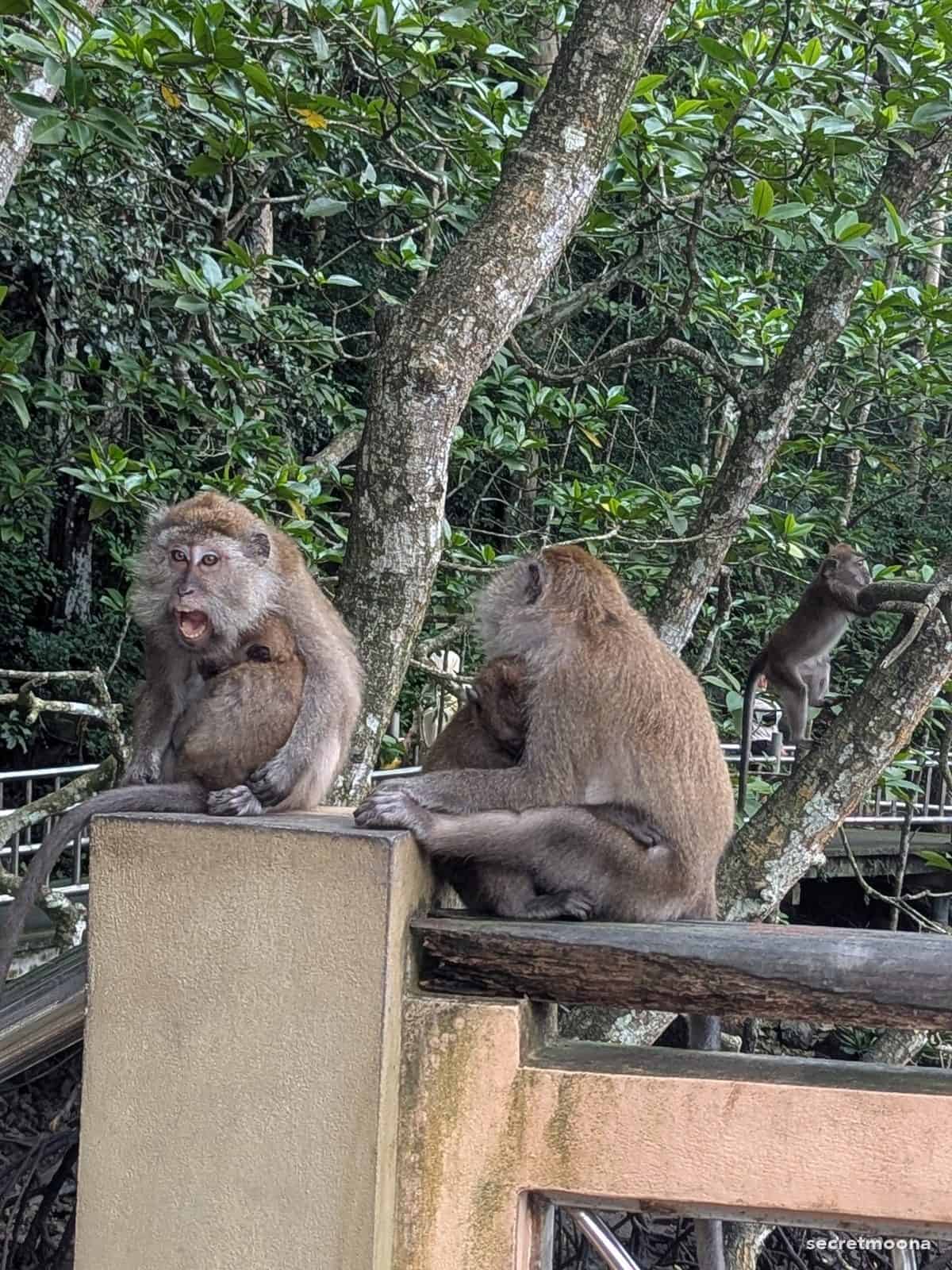
We also visited a bat cave. Bats need darkness and quiet in the daytime, and people were shouting and firing off camera flashes. Outside, others were bothering the monkeys. Nobody had explained the rules, and nobody was enforcing them. It was the low point of the day.
The beach stop
The tour promised swimming and snorkelling at Pantai Pasir Panjang. The sea temperature was good but the beach was covered with debris the waves had brought in. There was almost no shade. Twenty minutes in, most of our group had had enough.

Getting back into the boat was the harder problem: there were no steps. You pull yourself up from the waterline, or you do not get in.
Honest trade-off: words like “easy” and “suitable for everyone” in a tour listing are worth nothing. Ask the operator directly how you board the boat, and ask before you pay.
Lunch was at the Tanjung Rhu Floating Restaurant and Fish Farm. By then I had started to wonder whether part of the route existed to deliver us there. We had passed several floating restaurants near the main sights, then travelled to a more secluded one that turned out to be under five minutes from the jetty.

Would I book the mangrove tour again?
Yes, but I would do it differently.
The scenery deserves the trip and our guide was good company and knew his subject. Next time I would book a private boat, agree the route in advance, and ask straight questions about the wildlife and skip some of the stops such as the cave.

A private tour costs more and buys you control: the pace, and the ability to skip anything you are not comfortable with. Whichever you book, do not choose on price alone. How an operator treats the animals should count for something.
An evening at Pantai Cenang
After the tour we went to Pantai Cenang, the liveliest stretch of coast on the island. It is nothing like Kuah or Burau Bay: hotels, cafes, bars, massage places, shops and water-sports stands one after another.
We happened to land on market night and worked our way along the stalls, mixing Malay and Thai dishes. Afterwards we walked down to the beach, where a fire show had pulled a crowd.

Day 3 — Rain, a massage, and a change of scene
I would not normally repack halfway through a five-night trip. In Langkawi it was worth it, because the two ends of the island are genuinely different holidays.
Kuah gave us town life and the eastern side. Burau Bay put us next door to Oriental Village and the SkyCab, and gave us the slow half we wanted at the end.
We started with breakfast at a local cafe near Maha Tower and meant to explore afterwards. Then the rain came down properly. Rather than push on and be miserable about it, we went for a massage instead.

Best decision of the trip.
Checking in at Hilton Burau Bay
We collected the bags and drove west. PureJoy to the Hilton took about thirty-five minutes.

The resort sits in jungle under limestone mountains, and arriving felt like starting a second holiday. We had booked a King Guest Room with Balcony and were upgraded to a Deluxe King Room with Balcony on my Hilton Honors Gold status. Ours faced the garden, which I liked — though if watching the sunset from your own balcony matters to you, pay for the sea view.
There are three restaurants, a coffee lounge, a spa, a gym, three main pools and five rock pools. Shops and local restaurants are about ten minutes away, though we had no intention of going anywhere that afternoon.
We walked the grounds, swam in the main pool and went down to the private beach for the sunset. After a busy start to Malaysia, having nowhere to be was the entire appeal.

It worked well for my mother, too. The routes around the property are step-free and there is a buggy for the longer distances — though everyone’s needs differ, so ring the hotel before booking if you need a particular room layout or help getting about.
We ate at Gingerfire that evening. The buffet was excellent and more expensive than eating in town, and on that night I thought it was worth it.
BOOK Hilton Burau Bay Langkawi Resort – Trip.com | Booking.com
Day 4 — The SkyCab, the SkyBridge and Oriental Village
Day four was the cable car. We took a Grab to Oriental Village and got there around one in the afternoon.
I had meant to be there at opening. The mountain disagreed: visibility was poor all morning, so we waited for the cloud to think about clearing. Langkawi’s weather changes in minutes, and the best plan is often to not have one.
Check the official Panorama Langkawi site before you go, for the operating calendar, maintenance closures and what tickets exist. We bought a combination ticket covering the standard gondola, the SkyBridge and SkyGlide.
Oriental Village
The village at the foot of the cable car holds the ticket counters, cafes, souvenir shops and a few attractions, including Art in Paradise, a 3D museum that would rescue a rainy hour.
Spectacled leaf monkeys work the village looking for food. They are adorable and they are wild, and people were feeding them anyway despite the signs. It teaches them to associate people with food and it changes how they behave. The macaques up at the viewing decks have clearly had the same education — hold on to your food and anything loose, keep your distance, and do not feed either.

The SkyCab
The gondola climbs hard over the rainforest towards Mount Machinchang. The forest drops away beneath you and the coastline arrives in the distance. Even through cloud, it was extraordinary.
There are two stages. The middle station has its own viewing platforms; the top one opens onto the summit viewpoints and the route to the SkyBridge. Give yourself time at both, because visibility can arrive or vanish inside a few minutes.
There was no queue going up, and we congratulated ourselves on not paying for the express ticket. A technical fault then stopped the service for about fifteen minutes just as we wanted to come down, a long queue built, and the express ticket suddenly looked like a bargain.
Honest trade-off: buy the express tickets for the way down if possible, not the way up. Mornings are quiet going up; it is the descent, after any delay, where the queue piles in.
If heights bother you, know that the route is steep and exposed. A premium gondola buys you space, not altitude.
The SkyBridge
The curved SkyBridge runs 125 metres above the forest. From the top station you either take the stepped jungle trail or buy a separate ticket for SkyGlide, an inclined lift.

We used SkyGlide because of my mother. It cut the walking, but it did not make the visit step-free — there were still queues, slopes and transfers between the gondola, the stations and the bridge. If mobility is a concern, contact Panorama Langkawi in advance and talk to staff before you settle on a ticket combination.
The bridge was my favourite part of the day. I have mixed feelings about large structures dropped into natural landscapes, and I still stood there for a long time. Forested mountains rolling down to the sea, islands scattered out towards the horizon. It is obvious why this is the island’s flagship.

Why we skipped Seven Wells Waterfall
Seven Wells, or Telaga Tujuh, is close by and I had hoped to fit it in. Reaching the upper pools means a serious climb, so it was not going to work for us.

This was one of several moments where we chose the comfort of the person we were travelling with over another entry on the list. I do not regret any of them. The waterfall will still be there.
Day 5 — A slow last morning
Our flight back to Kuala Lumpur was early afternoon, so there was no room for anything ambitious.
We had a long breakfast and spent the morning moving between the main pool and the rock pools. We walked the beach, looked at it all one more time, and stayed put until it was time for the airport.

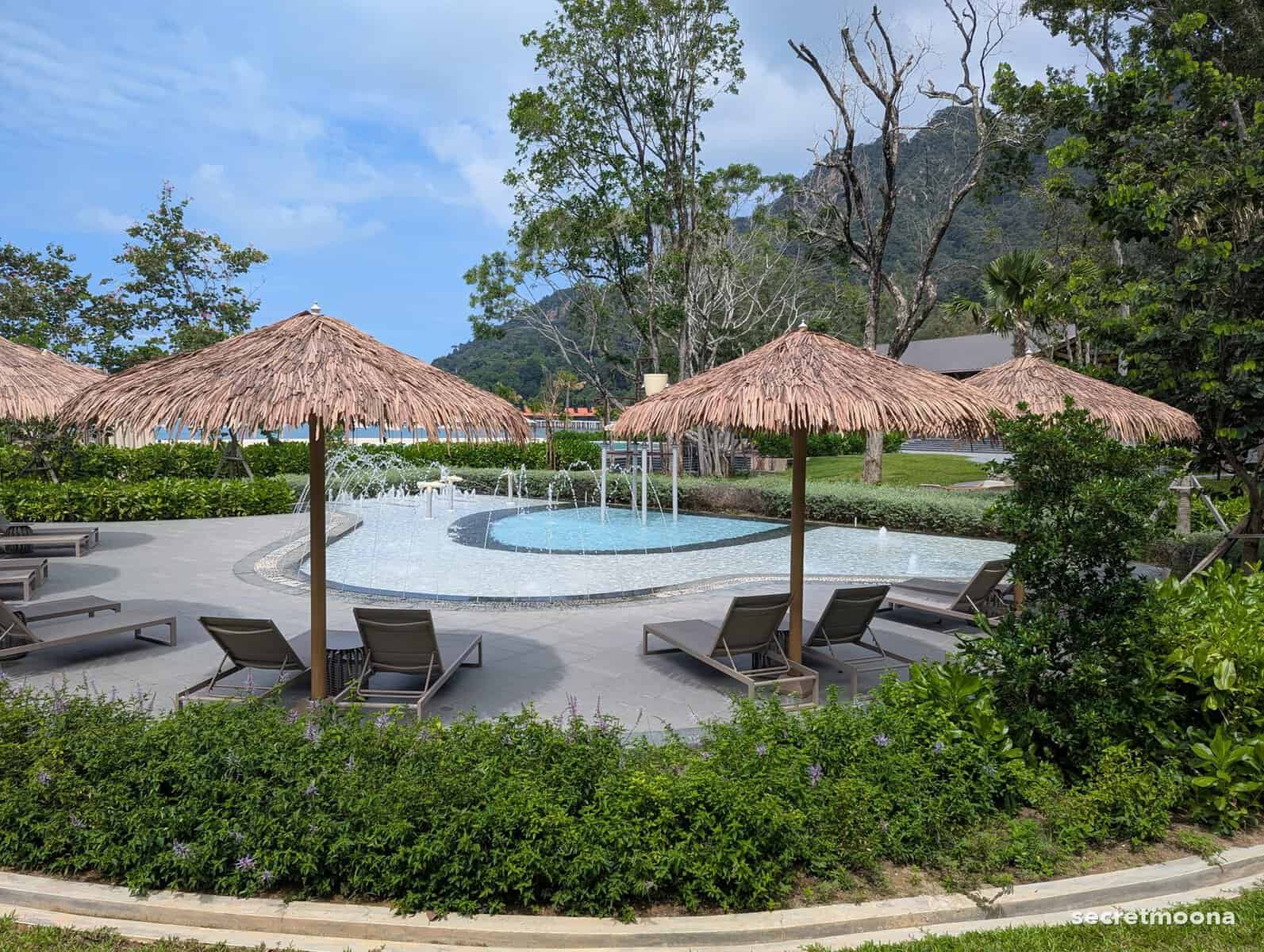
It was not a big finish and it was the right one. If there is a lesson from travelling with someone slower — and from misjudging a few flight times over the years — it is that arrival and departure days hold far less usable time than you think they will.
Planning your own five days
Getting there from Kuala Lumpur
Flying is the easy answer: about an hour from Kuala Lumpur. We flew Malaysia Airlines and paid £235 for three return flights, which is what happens when you book late. Fares swing a lot, so compare departure times as well as prices — an awkward slot can cost you half a day.

There are ferries too, but routes and seasonal timetables shift. If you are coming from Thailand or elsewhere in Malaysia, check with the operator before you book accommodation around a crossing.
When to go
Langkawi is hot and humid all year. The drier months run roughly November to March, with the usual tropical caveat that nothing is guaranteed.
We went in September, in the wetter half of the year, and had barely any rain. What came was short and heavy rather than a washed-out day, and our morning near Maha Tower was the only one it really cost us.
I would still pack a light rain jacket, keep electronics covered, and leave one day loose. For the SkyCab especially, look at the live visibility rather than a long-range forecast.
Getting around
There is no rail, and the sights are spread around the island. We used Grab throughout and it worked well between our hotels and the main attractions.

For a day with several stops, a private driver is easier and saves a lot of getting in and out of different cars. If someone in your group uses a mobility aid, confirm the vehicle size and the boot space when you book.
Hiring a car gives you the most freedom, as long as you are happy driving on the left and have read the insurance. Scooters are everywhere; that does not make them the sensible choice.
Where to stay
There is no single best area. It depends what you want out of the week.
- Kuah is good for the ferry terminal, shops, local restaurants and Eagle Square. Decent value, not a beach base.
- Pantai Cenang suits you if you want a busy beach with restaurants, shops and nightlife on the doorstep.
- Burau Bay and the north-west are greener and more secluded, and close to Oriental Village and the SkyCab. The resort is most of the experience here, and eating outside it is limited.
Honest trade-off: splitting our stay worked because the two ends of the island feel so unalike, and it cut out some long cross-island drives. It also costs you a morning and the energy of repacking. If packing stresses you out, pick one base and spend the difference on a driver.
Is five days enough for Langkawi?
Five days was comfortable for a first visit. We fitted in the mangroves, Pantai Cenang, Kuah, the SkyCab and a lot of swimming without turning the holiday into a race.
Three days would cover the headline attractions, but you would have no slack for bad weather or a proper rest. A full week suits anyone who wants several boat trips, more beaches or long days at the resort.
If you are combining Langkawi with Kuala Lumpur, five days also gives you a real contrast with the pace of the capital.
What I would do differently
Three things, and none of them spoiled the trip.
- Book a private mangrove boat and ask properly about the route, how they handle the wildlife, and how you get on and off.
- Give transfer and flight days far more room, especially travelling with someone who moves more slowly.
- Keep one day completely empty — for the weather, or simply to sit by the pool without feeling I was wasting the trip.
These are the things I wish someone had told me before we went.
Frequently asked questions
How many days do you need in Langkawi?
Five days is comfortable for a first visit and leaves room for the mangroves, the SkyCab, a beach day and some genuine rest. Three days covers the headline sights but gives you no slack for bad weather. A week suits anyone wanting several boat trips or long resort days.
What is the best area to stay in Langkawi?
There is no single best area. Kuah is useful for the ferry terminal, shops and local restaurants but is not a beach base. Pantai Cenang is the busy choice, with restaurants, shops and nightlife on the doorstep. Burau Bay and the north-west are greener and quieter and sit close to the SkyCab, though eating outside your resort is limited.
Is the Langkawi SkyCab worth it?
Yes, and the SkyBridge was the best part of the day. One piece of advice: buy the express tickets for the descent rather than the ascent. Mornings are quiet going up, but any technical delay builds a long queue for the way down.
How do you get around Langkawi without a car?
Grab works well across the island and we used it throughout. For a day with several stops, a private driver saves a lot of getting in and out of cars. There is no rail network, and the attractions are spread around the coast.
Is Langkawi accessible for someone with limited mobility?
Partly. The Hilton Burau Bay resort was step-free with a buggy service, and SkyGlide reduces the walking at the SkyBridge without making the visit step-free. The mangrove boat had no steps for boarding, and Seven Wells Waterfall needs a serious climb. Ask operators directly rather than trusting the word “easy” in a listing.
When is the best time to visit Langkawi?
The drier months run roughly November to March. We went in September, in the wetter half of the year, and had very little rain — short heavy bursts rather than lost days. Pack a light rain jacket and keep one day flexible whenever you go.
Final thoughts
Langkawi gave us the change of pace we needed after Kuala Lumpur. In five days we got the ordinary rhythm of Kuah, the tangled waterways of the mangroves, a noisy evening at Pantai Cenang, the view from the top of the SkyCab and the quiet at Burau Bay.
Not all of it was good. The mangrove tour left me with questions I still have not settled, the rain took a morning, and my mother’s mobility shaped half our decisions. I have left all of that in, because that is the trip we had and I would rather tell you about it than hand you a version with the awkward parts edited out.
What stayed with me was the landscape. Ancient mountains under jungle, the sea showing up between the trees, and sunsets that made us stop whatever we were doing. Five days was enough to see several sides of the island and still remember it was supposed to be a holiday.
If Langkawi is part of a longer Malaysia trip, you might also want my Hilton Burau Bay Langkawi review and my Kuala Lumpur and Langkawi itinerary. Travelling for longer? My sister’s three-week Malaysia itinerary covers more of Peninsular Malaysia and the Perhentian Islands.
PIN FOR LATER
Planning your own trip to Langkawi? Save these for later.


Related Posts:


