
Best Things to Do in Strasbourg, France: A Weekend Guide
Last Updated on 01/10/2026 by Mayi

Strasbourg had been on my France wish list for years. I was drawn to its colourful half-timbered houses, canals and unique blend of French and German influences. When I finally visited at the end of September, I found a compact, characterful city that was ideal for a two-day break.
As the capital of Alsace and one of Europe’s institutional capitals, Strasbourg combines a beautifully preserved historic centre with lively neighbourhoods, excellent museums and a distinctive food culture. It works equally well for couples, families and solo travellers—and many of its highlights are easy to explore on foot.
This guide covers the best things to do in Strasbourg, where to eat, how to get there and the practical details you need to plan a weekend in the city.
Planning a wider trip? Start with my France travel guide for more regional guides, itineraries and hidden gems.

Why visit Strasbourg?
Strasbourg lies in France’s Grand Est region, close to the German border and on the River Ill, a tributary of the Rhine. Its position has shaped its architecture, language and food, giving the city a character that feels different from many other French destinations.
The historic centre, Grande Île, and the neighbouring Neustadt district form a UNESCO World Heritage Site. Within a relatively small area, you can admire Gothic architecture, wander beside canals, eat in a traditional winstub and learn about Strasbourg’s role in modern Europe.
Two days are enough to see the main sights at a comfortable pace, although an extra day would allow you to explore more museums or take a day trip along the Alsace Wine Route.
Best things to do in Strasbourg
Strasbourg Cathedral


Notre-Dame de Strasbourg cathedral is Strasbourg’s most recognisable landmark and the best place to begin exploring the city. Built mainly between the 12th and 15th centuries, this Gothic masterpiece rises dramatically above the surrounding streets. Its elaborate façade is made from pink sandstone from the Vosges Mountains, which appears to change colour throughout the day.

Inside, look out for the medieval stained-glass windows, the enormous rose window and the Renaissance astronomical clock. The clock’s procession of the apostles takes place at 12:30 pm, following a film presentation at noon. Entry to the cathedral itself is free, but there is a separate charge to see the astronomical clock presentation.
Try to arrive early in the morning, when the area around Place de la Cathédrale is usually quieter. Opening times and access arrangements can change, particularly during religious services and special events, so check the official Strasbourg tourism website before visiting.
Climb to the cathedral platform


For one of the best views over Strasbourg, climb the 332 steps to the cathedral’s viewing platform. The platform is 66 metres above ground and offers a wide panorama across the city’s rooftops. On a clear day, you may also see the Vosges Mountains and Germany’s Black Forest.
The spiral staircase becomes narrow in places, so the climb may not suit visitors with limited mobility or anyone uncomfortable with heights. There is no lift.
Practical tip: At the time of updating, adult admission is €10, with reduced and free-entry categories available. Check the official cathedral or Strasbourg tourism website before visiting, as prices and opening times can change.
Explore Grande Île, Strasbourg’s historic centre


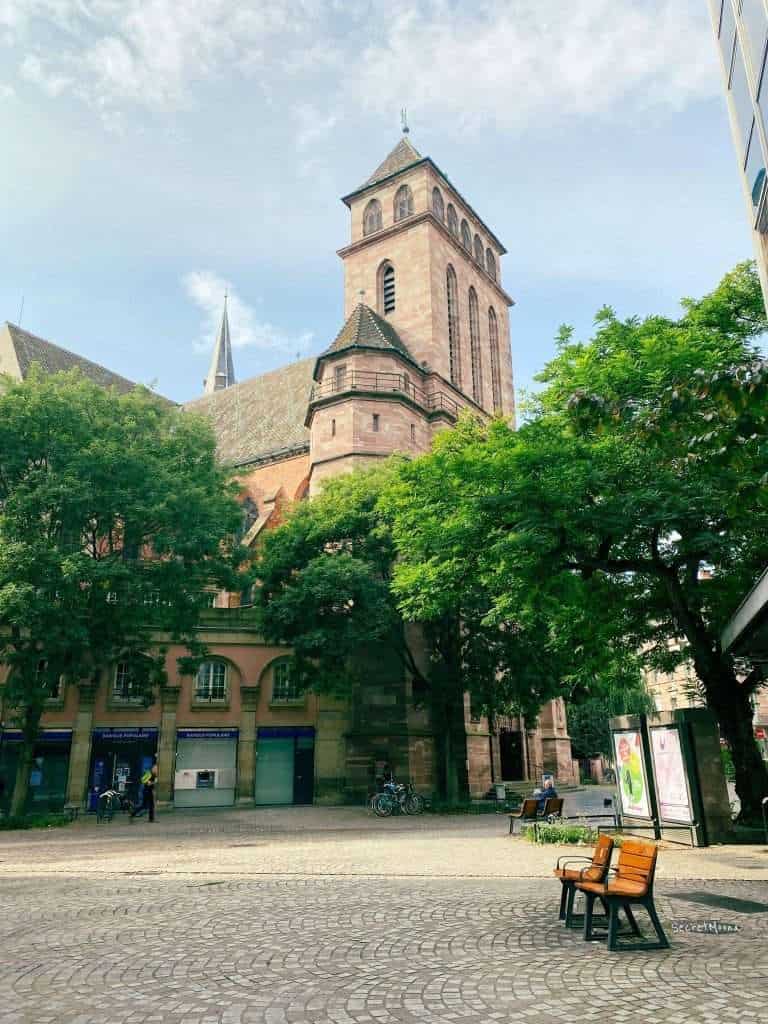
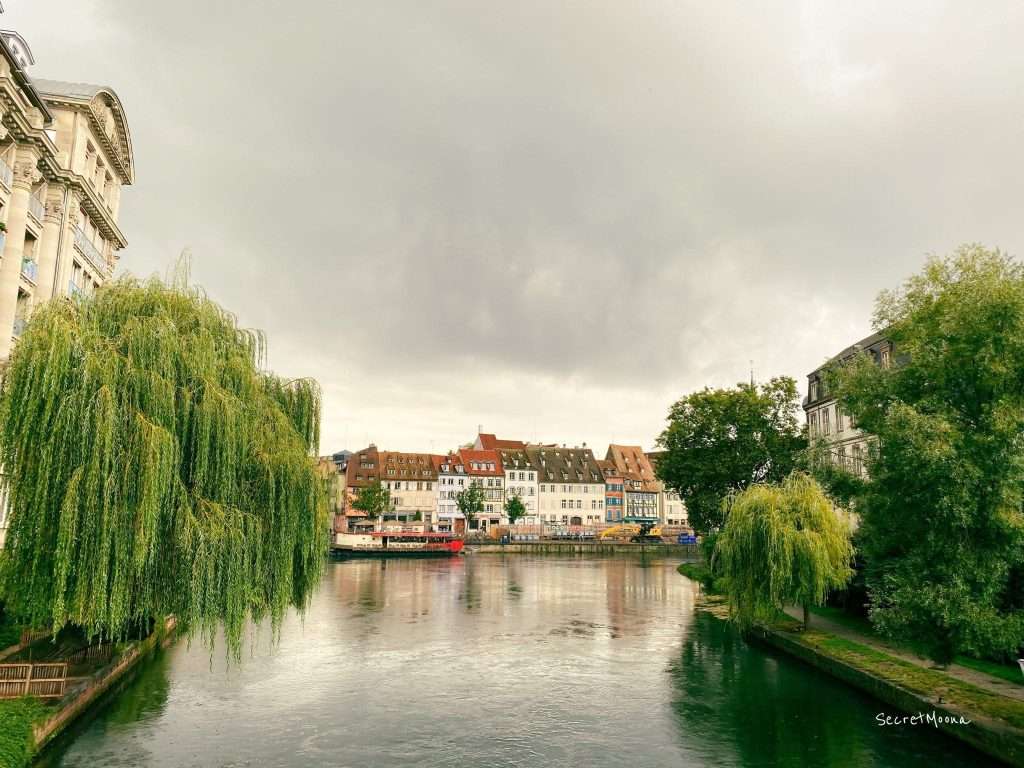
Surrounded by branches of the River Ill, Grande Île is Strasbourg’s historic heart. It became a UNESCO World Heritage Site in 1988 and is the part of the city where you will find the cathedral, handsome squares and lanes lined with buildings that reflect both French and German influences.
One of its most striking buildings is Maison Kammerzell, beside the cathedral. Its richly carved timber façade dates largely from the 16th century and makes it one of Strasbourg’s best-known historic houses. Today, it contains a restaurant famous for its fish choucroute.
Grande Île is best explored slowly. Leave time to turn down smaller streets, notice architectural details and stop at one of the cafés around the centre.
Stop at Place Kléber and Strasbourg’s other squares

Place Kléber is Strasbourg’s largest central square and a natural meeting point between the cathedral, shopping streets and Petite France. Cafés, shops and a mixture of historic and modern buildings surround it.
During the festive season, the city’s enormous Christmas tree stands here. At other times of year, it is a pleasant place to pause and watch daily life unfold.
Other squares worth seeing include Place du Marché Gayot, a lively courtyard-like square filled with restaurant terraces, and Place Gutenberg, named after Johannes Gutenberg, who lived and worked in Strasbourg during the development of his printing experiments.
Wander through Petite France


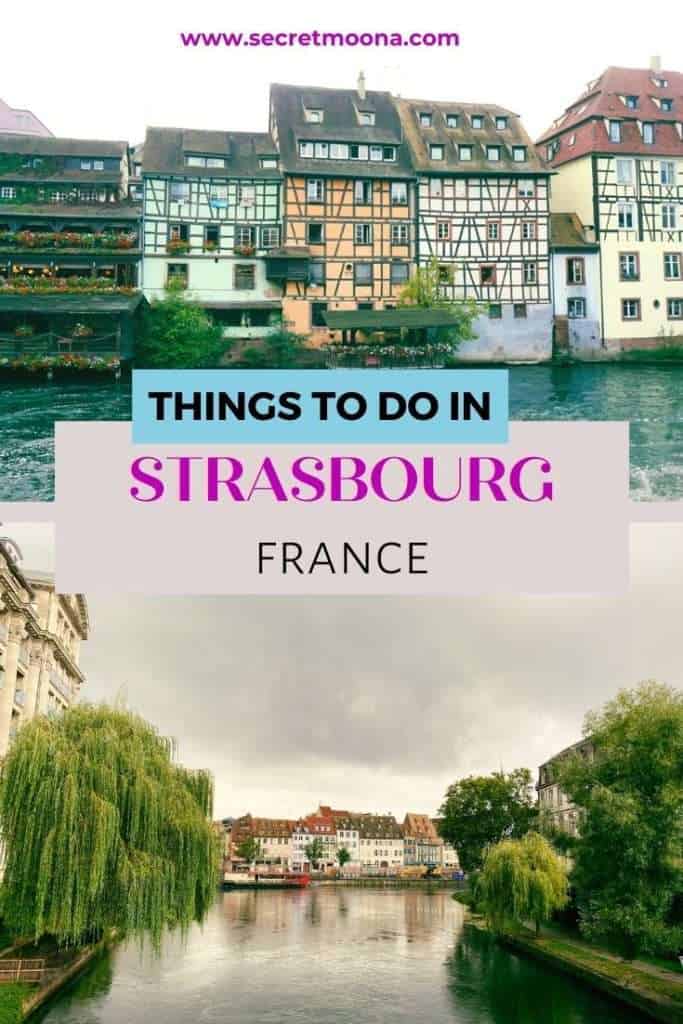
Petite France is Strasbourg’s most picturesque district. Its canals, flower-filled bridges and half-timbered houses create the scene many visitors imagine when they first think of Alsace.
The neighbourhood was once home to tanners, millers and fishermen. Today, its cobbled lanes and waterside terraces attract plenty of visitors, but it remains a lovely place for an unhurried walk. Explore early in the morning for quieter streets, then return later for lunch or an evening drink beside the water.
Petite France was everything I had imagined Strasbourg would be and even prettier in person.


See the Covered Bridges
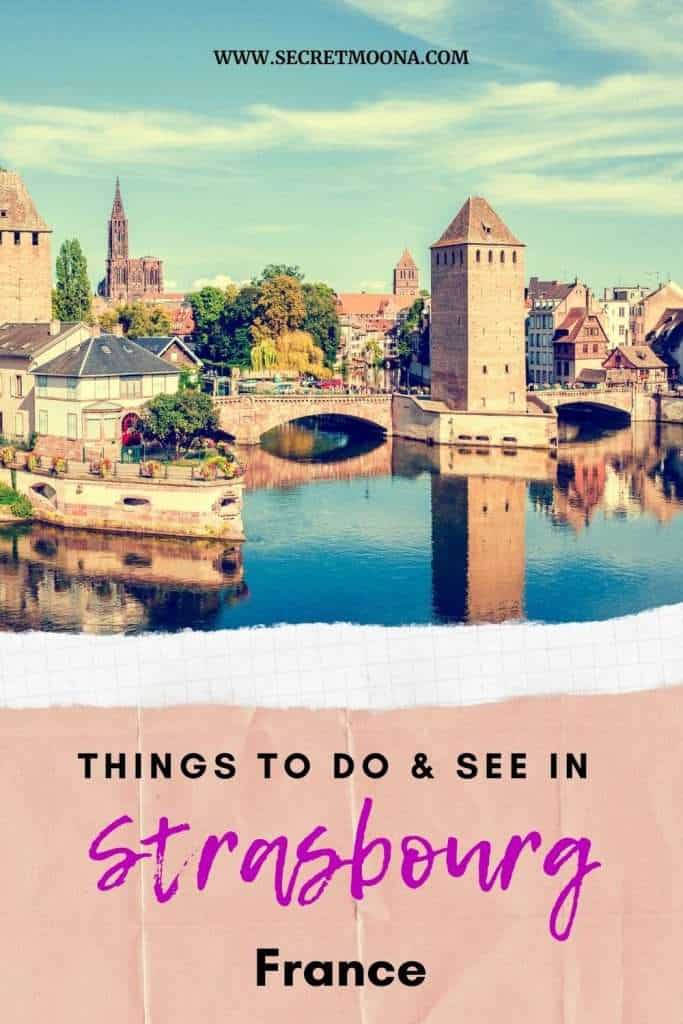
At the edge of Petite France, the Ponts Couverts consist of three bridges and four medieval towers spanning channels of the River Ill. Their name means “covered bridges”, although the original wooden roofs were removed in the 18th century.
The bridges formed part of Strasbourg’s former defensive system. They are especially photogenic when viewed from the terrace of the nearby Barrage Vauban.iver, are not covered by the way.
Walk across the Barrage Vauban

The Barrage Vauban was built in the late 17th century as part of Strasbourg’s defences. In the event of an attack, its sluices could be used to flood the land south of the city.
Today, you can walk through the structure and climb to its panoramic terrace for an excellent view of the Ponts Couverts, Petite France and the cathedral spire. Access is free, making this one of the best viewpoints in Strasbourg.
If you enjoy fortified towns and architecture, you may also like my guide to must see walled cities.
Take a Batorama boat tour

A boat trip is an easy way to understand Strasbourg’s layout and see districts beyond the historic centre. Batorama tours travel along the River Ill and canals, passing Grande Île, Petite France, Neustadt and the European institutions.
Commentary is available in several languages through individual headphones, and the covered boats are useful when the weather is cool or wet. Tours usually leave from the landing stages near the cathedral or Quai au Sable, but routes and departure points can vary.
I do not enjoy every sightseeing cruise, but I found Strasbourg’s genuinely worthwhile because it connected the city’s medieval, imperial and European stories.
Practical tip: Current published fares start at €12.50 for the shorter route and €16.20 for the longer route. Book ahead during weekends, summer and the Christmas-market period, and check the live schedule before travelling.
Discover Strasbourg’s museums

Strasbourg has a strong collection of museums covering art, archaeology and Alsatian history. You will probably only fit one or two into a weekend, so choose according to your interests:
- Musée Alsacien: Traditional Alsatian homes, clothing, crafts and everyday objects.
- Musée Historique: The political, social and cultural history of Strasbourg.
- Museum of Modern and Contemporary Art: Works from the late 19th century to the present, in a striking building near the Barrage Vauban.
- Palais Rohan: An 18th-century palace containing the Archaeological Museum, Museum of Decorative Arts and Museum of Fine Arts.
Palais Rohan sits beside the cathedral and close to the boat-tour landing point, which makes it easy to combine the two.
Explore Neustadt
Do not limit your visit to the postcard streets of Grande Île. Neustadt—the “new town”—was developed largely during the period of German rule between 1871 and 1918. Its broad avenues, monumental public buildings and grand residential architecture contrast with the medieval centre.
Together, Grande Île and Neustadt illustrate important stages in Strasbourg’s history and are recognised by UNESCO. Look out for Place de la République, the Palais du Rhin and the university area.
Visit the European District
Strasbourg is home to the European Parliament, the Council of Europe and the European Court of Human Rights. Their modern buildings sit northeast of the centre, around the River Ill and Parc de l’Orangerie.
The area is interesting even if you only view the architecture from outside. If you want to enter an institution, check its official visitor information in advance: opening arrangements, booking rules and identification requirements vary.
Relax in Parc de l’Orangerie
Near the European Quarter, Parc de l’Orangerie is Strasbourg’s oldest major park and a welcome break from sightseeing. Its lawns, mature trees, flowerbeds and lake make it a good place for a walk or picnic.
You may also spot white storks, a symbol of Alsace, nesting in and around the park. If you have more time, Strasbourg’s Botanical Garden near the university is another peaceful green space to visit.
What to eat and drink in Strasbourg
Eat a flammekueche
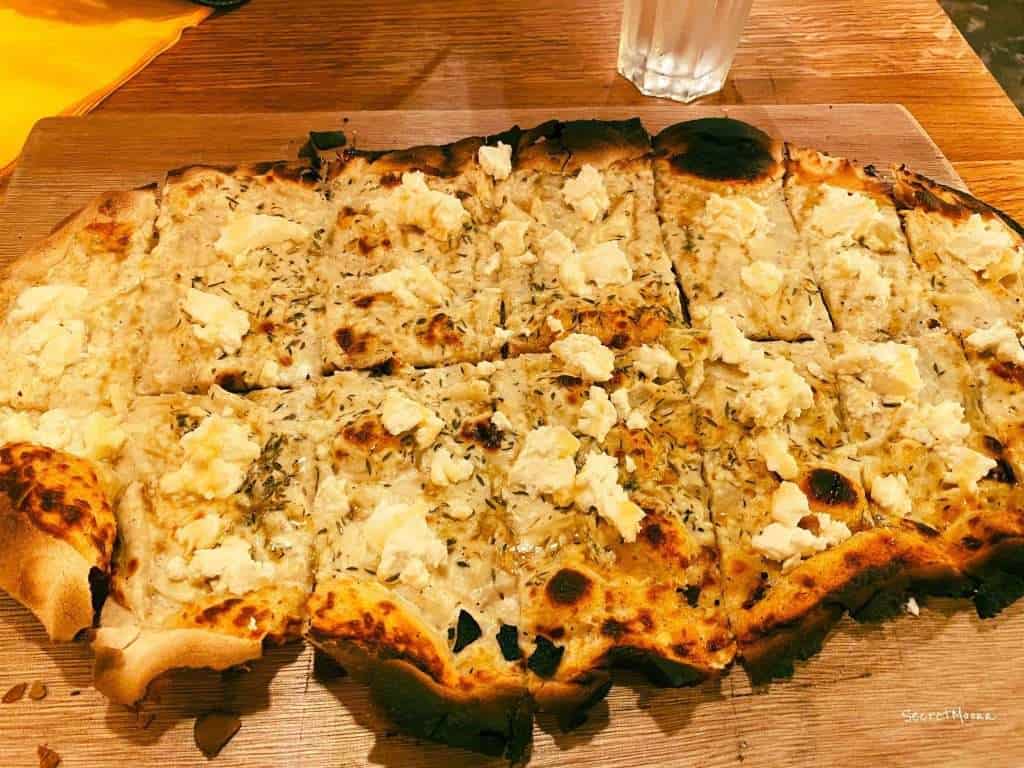
Flammekueche—known in French as tarte flambée—is an Alsatian speciality made with very thin dough, traditionally topped with crème fraîche, onions and lardons. Many restaurants offer vegetarian and creative versions too.
I enjoyed the goat’s cheese, honey and thyme version La Binchstub. Flam’s is another option specialising in tarte flambée. Restaurant details can change, so check recent opening hours and reviews before visiting.
Taste kougelhopf

Kougelhopf is a tall, ring-shaped Alsatian cake with a light brioche-like texture, usually made with raisins and almonds. It is eaten throughout the year, although it feels especially suited to the festive season.
You will find it in bakeries across Strasbourg. I received one as a welcome gift at my hotel and liked it so much that I bought another to take home.
Eat in a traditional Alsatian winstub


A winstub is a traditional Alsatian restaurant or wine tavern: warm, informal and usually decorated with plenty of regional character. Menus often feature dishes such as choucroute garnie, baeckeoffe, spaetzle, fleischnacka and tarte flambée.
La Maison des Tanneurs in Petite France and Au Pont Corbeau near the Musée Alsacien are well-known options. Reserve ahead at popular restaurants, particularly at weekends and during the Christmas season.
Learn about Alsatian wine
Alsace is particularly known for aromatic white wines such as Riesling, Gewurztraminer, Pinot Gris and Pinot Blanc, although the region also produces Crémant d’Alsace and Pinot Noir.
In the city, the Historic Cellar of Strasbourg Hospices offers a fascinating introduction to the region’s winemaking heritage. Check the current visit and tasting arrangements before going, as tours may require advance booking.
If you’re searching for a good one to try or take home, visit Au Millésime, which offers a great selection of Alsacian wines. The sommelier is happy to give expert advice with a smile.
If wine is a main reason for your trip, consider adding one or two villages on the Alsace Wine Route. Strasbourg is a useful starting point, but places such as Obernai, Ribeauvillé, Riquewihr and Colmar provide a different experience of the region.
Visit France’s Most Famous Christmas Market
Strasbourg’s Christkindelsmärik dates back to 1570 and is one of Europe’s oldest Christmas markets. Festive stalls spread across several squares rather than occupying a single site, while Place Kléber hosts the city’s giant Christmas tree.
Expect seasonal decorations, crafts, bredele biscuits, pretzels and vin chaud. It is also the busiest time of year, so book transport and accommodation early and try to visit the markets on weekday mornings if you prefer smaller crowds.
Please note that the official dates and programme for Strasbourg’s 2026 Christmas markets are still being finalised. For the latest information, check the official Strasbourg Christmas website before planning your visit.
Practical information
How to get to Strasbourg
By train
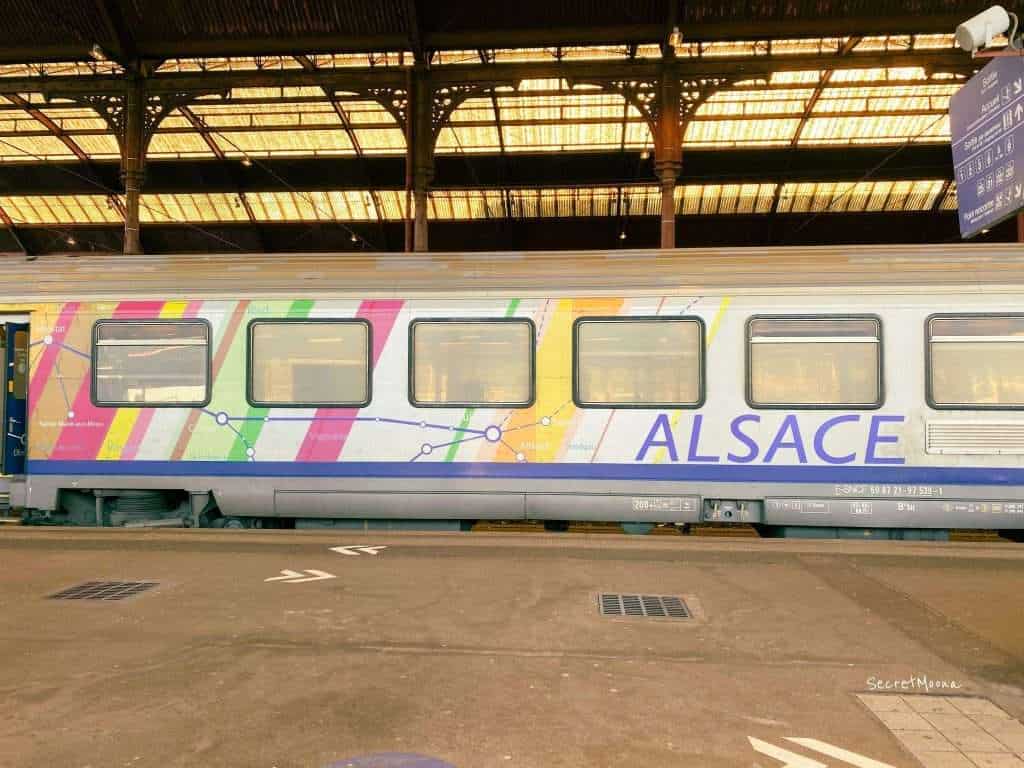
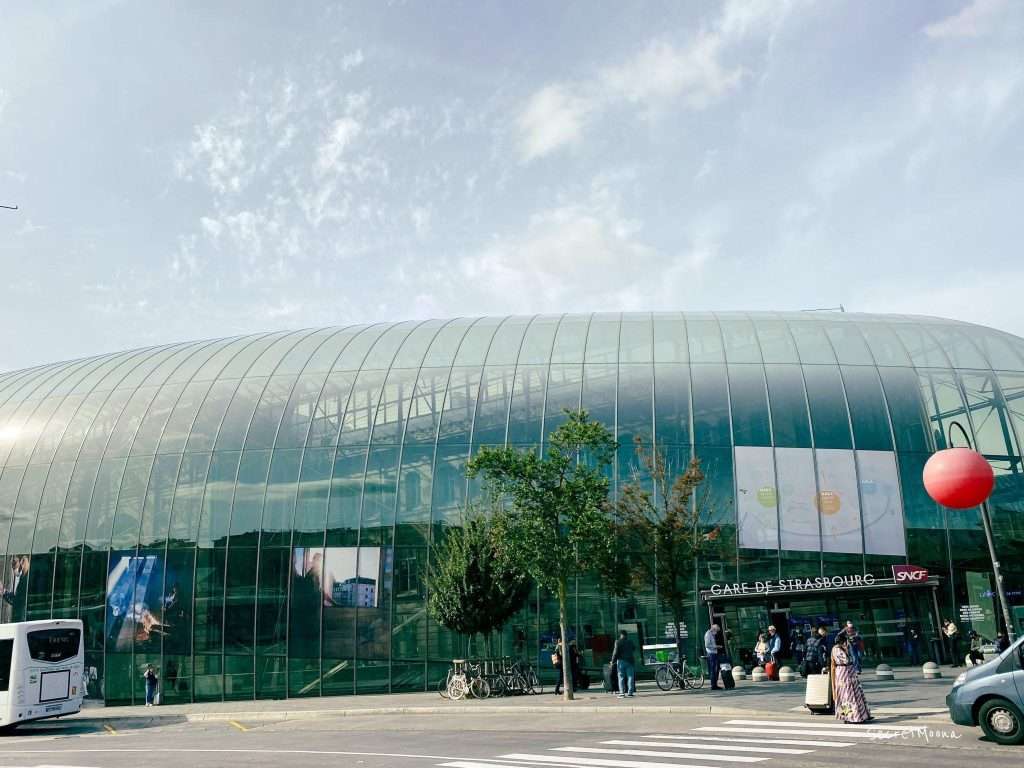
Strasbourg is very well connected by rail, and its main station is a short walk from Petite France. Direct TGV INOUI services from Paris can take under two hours, depending on the departure.
From London, travel by Eurostar and change in Paris. Remember that this usually involves transferring between Gare du Nord and Gare de l’Est, so allow enough time between trains. Some itineraries may involve a different connection; compare the complete journey before booking.
by coach
Long-distance coaches can be a cheaper alternative to the train, although journeys are much longer. FlixBus and BlaBlaCar Bus serve Strasbourg; check Omio for fares.
By plane
Strasbourg Airport is in Entzheim, around 10 kilometres from the city. Regional trains connect the airport station with Strasbourg’s central station in roughly 8–10 minutes.
Depending on your starting point, flying to another nearby airport and continuing overland may also be possible, but compare the full journey time rather than the airfare alone.
How to get around Strasbourg
On foot
Walking is the easiest way to explore Grande Île and Petite France. The historic centre is compact, and many of the main attractions are close together.
By public transport
The CTS tram and bus network is useful for reaching the European Quarter and other neighbourhoods. At the time of updating, a single ticket costs €1.90 when loaded through eligible CTS options and €2.50 when bought on board a bus. A 24-hour solo ticket starts at €4.60, while a 72-hour solo ticket costs €10.20.
Fares change, so link to the official CTS ticket page rather than relying only on prices written in the article.
By bike
Strasbourg has an extensive network of cycle routes and is one of France’s most cycle-friendly cities. Vélhop offers short- and longer-term bicycle hire. Check current prices, collection points and availability directly before travelling.
By car
You do not need a car to explore central Strasbourg. If you are driving, consider using a park-and-ride site and taking the tram into the centre. A car becomes more useful if you plan to visit smaller villages along the Alsace Wine Route, although trains and organised tours cover some popular destinations. Check car options here.
Best time to visit Strasbourg
Strasbourg is a year-round destination, but the experience changes considerably by season:
- Spring: Mild weather, flowers and generally manageable crowds.
- Summer: Long days and lively terraces, but more visitors and occasionally hot weather.
- Autumn: Cooler walking weather, changing leaves and the atmosphere of the Alsace wine-harvest season. I visited at the end of September and found it a good balance.
- Late November and December: Beautiful festive decorations and Christmas markets, along with the year’s largest crowds and highest demand for accommodation.
For a first visit outside Christmas, late spring or early autumn would be my choice.
Where to stay in Strasbourg

For first-time visitors, Grande Île and Petite France put you close to the major sights. The station area is convenient for a short stay or day trips, while Neustadt suits travellers looking for a quieter neighbourhood within walking distance of the centre.
I stayed at Voco Strasbourg Centre – The Garden, around a 10-minute walk from the station and approximately 15 minutes from Petite France. I liked its modern décor, comfortable room and welcoming team. The wellness facilities were another bonus after a full day of walking.
Check availability at voco Strasbourg Centre – The Garden
A suggested two-day Strasbourg itinerary
Day one: Historic Strasbourg
Begin at Strasbourg Cathedral, then explore the lanes and squares of Grande Île. Continue towards Petite France, the Ponts Couverts and the Barrage Vauban. Finish with dinner in a traditional winstub.
Day two: Museums and modern Strasbourg
Visit the Musée Alsacien, Palais Rohan or the modern-art museum in the morning. In the afternoon, take a Batorama cruise or explore Neustadt and the European Quarter, followed by a walk in Parc de l’Orangerie.
Is Strasbourg worth visiting?
Yes—Strasbourg is one of France’s most distinctive city-break destinations. Its Gothic cathedral and half-timbered houses are reason enough to visit, but its appeal goes further: the city has rewarding museums, excellent regional food, peaceful waterways and layers of French, German and European history.
A weekend gives you enough time to enjoy the essentials without rushing. If you can stay longer, Strasbourg also makes a good base for Colmar, the Alsace Wine Route and nearby towns on both sides of the French-German border.
Frequently asked questions
How many days do you need in Strasbourg?
Two full days are ideal for a first visit. Add a third day if you want to visit several museums or take a day trip.
Is Strasbourg walkable?
Yes. Most attractions in the historic centre are within easy walking distance. Trams are useful for the European Quarter and places farther from Grande Île.
Is Strasbourg expensive?
Strasbourg can suit different budgets. Major outdoor sights such as Petite France, the Ponts Couverts and Barrage Vauban are free. Accommodation tends to become more expensive during the Christmas-market period.
Can you visit Strasbourg without a car?
Absolutely. The city has excellent rail connections and an effective tram and bus network. A car is only worth considering if you want more flexibility in the smaller wine villages.
Is Strasbourg a good solo-travel destination?
Yes. The centre is compact, public transport is easy to use and there are plenty of museums, cafés and group tours that work well for solo visitors.
PIN IT!
Disclosure: This post contains a few affiliate links, which means I may receive a small commission, at no cost to you, if you make a purchase through my link!
Related Posts:


I desperately want to return to France and this area looks so lovely.. I must get there soon and add it to my itinerary 🙂
Definitely worth it!
Stunning photos! Such a fun place to visit and so many things to do in Strasbourg. I had no idea! Can’t wait to visit now.
Thanks so much! Strasbourg is a beauty!
I haven’t had the chance to visit this part of France before but it looks amazing. I’d love to take photos here.
I have been lucky enough to visit Strasbourg twice-once in the summer, the other time for the Christmas market. I loved it. You wrote a great article.
This looks lovely! I can’t wait to visit during our next trip to France.
Absolutely love this region in France. Thank you for such a detailed guide and your photos are really beautiful.
I’ve been desperately wanting to book a trip to Strasbourg and also Colmar. Sounds gorgeous to explore one of those towns by bike!
I’ve always wanted to visit this part of France, hope I will this year. Thanks for this detailed article!