

7 Days in Madeira: The Itinerary I Wish I’d Had
Last Updated on 07/09/2026 by Mayi
Madeira looks tiny on a map. Then you drive it, and realise that a 40-kilometre journey can take you from a sunny fishing harbour to a laurel forest wrapped in fog, past a roadside waterfall, and out to a clifftop where the Atlantic disappears into the haze.
That contrast is the whole appeal. It is also the thing most first-time itineraries get wrong: they treat the island as small, plan six stops a day, and end up spending the week in the car.
I spent a week here in late May, and I came home with a list of things I would do differently: days I would reorder, an afternoon I would give back, and two or three places I would have stayed at much longer. This is that corrected version — the itinerary I wish someone had handed me on day one.
One week is the sweet spot. Seven days gives you Funchal’s markets and gardens, the volcanic east, the mountains, the moody north coast, at least one proper levada walk and a couple of slow afternoons in villages where nothing much happens — which, on this island, is often the best part.
This 7-day Madeira itinerary is built for a first visit and works best with a hire car, though I have included alternatives for anyone who would rather not drive those hairpin bends. Treat the order as flexible. Madeira makes its own weather, particularly above 1,000 metres, so the mountain and hiking days should move around the forecast rather than the other way round.
At a glance: Days 1–2 for Funchal and the east coast, day 3 in the mountains, day 4 on the north-west coast, day 5 walking a levada around Rabaçal, day 6 along the sunny south-west, and day 7 for Monte, the Atlantic, or whatever the weather stole earlier in the week.
Is one week enough for Madeira?
Yes — seven days is an excellent length for a first trip. You will not see every village or walk every levada, but you will experience the island’s real contrasts: city and countryside, coast and mountain, subtropical garden and bare volcanic rock.
The temptation is to fill every day with viewpoints. Try not to. Some of my best hours in Madeira were unplanned: pulling over because the light had gone golden on a banana terrace, or sitting outside a village café while the cloud came down the valley.
One planning note: this itinerary assumes seven full days on the island. If your flights eat into the first and last days, merge the shorter Funchal activities from days one and seven into a single day.
Your 7-day Madeira itinerary at a glance
| Day | Area | Main experiences |
|---|---|---|
| 1 | Funchal | Old Town, Mercado dos Lavradores, painted doors and Madeira wine |
| 2 | East Madeira | Ponta de São Lourenço, Caniçal, Machico and Garajau |
| 3 | Central mountains | Pico do Arieiro, Ribeiro Frio and Santana |
| 4 | North-west coast | São Vicente, Seixal, Porto Moniz and Fanal |
| 5 | Rabaçal | A levada walk, then Calheta and Ponta do Sol |
| 6 | South-west coast | Câmara de Lobos, Cabo Girão and the western villages |
| 7 | Funchal and the Atlantic | Monte gardens, whale watching or a slow final day |
The route works in reverse, and any two days can swap places. The only fixed rule is the one about weather, below.
Three things that shape this itinerary
The weather decides, not the plan. Sunshine on Funchal’s promenade tells you nothing about conditions at Pico do Arieiro or Fanal, which sit in a different climate entirely. Check the live webcams each morning and keep days 3 and 5 interchangeable — and if you are offered one clear mountain day, take it, whatever the plan said.
A hire car buys you the good hours. Early light at the peaks, a village at dusk, the ability to leave when the cloud arrives. Four or five days of car hire is usually enough — you do not need one for Funchal.
Trails close. Fires, landslides, maintenance and weather all shut Madeira’s official walks, sometimes at short notice, and the access and booking arrangements have changed more than once in recent years. Check the official trail status the evening before, not the month before. More on this in the driving and planning guide.

Day 1: Funchal’s Old Town, market and flavours
Start in the capital. Funchal deserves better than a rushed evening squeezed between road trips, and its centre is compact enough to cover on foot.
Begin around Avenida Arriaga, where the black-and-white calçada paving, jacaranda trees and colonial-era buildings set the tone. Walk to the Sé Cathedral, then down to the marina and east into the Zona Velha.
Rua de Santa Maria is the street everyone photographs, thanks to the Art of Open Doors project that turned its doorways into an open-air gallery. It is touristy — the restaurant touts will tell you so themselves — but look past the terraces and there is genuinely good work on those doors.
Mercado dos Lavradores is next, worth it for the tiled façade, the flower sellers and the wall of passion fruit varieties you have never seen before. One honest warning from experience: the fruit stalls are priced for visitors, and vendors are generous with free slices before quoting a price. Ask first, and buy your mangoes in a supermarket instead.
For lunch, this is the day for bolo do caco with garlic butter, a prego sandwich or a plate of lapas (grilled limpets) with lemon.

In the afternoon, choose between a Madeira wine tasting — Blandy’s Wine Lodge in the centre is the easiest introduction — and a slow wander through Santa Catarina Park. Football fans can add the CR7 museum near the marina, which covers Cristiano Ronaldo’s Madeiran childhood as much as the trophies.
Finish with dinner in the Old Town, and try to find a restaurant with live fado. There is something about hearing that first guitar line while a plate of black scabbard fish arrives that makes the evening feel like Portugal rather than a holiday island — the room drops to a hush, and the singer takes over. Several places along Rua de Santa Maria and the surrounding lanes host performances a few nights a week; ask your hotel which ones are on while you are there, since the schedule moves around.
Black scabbard fish with banana, espetada on a laurel skewer and a passion-fruit poncha cover most of the island’s greatest hits; my Madeira food guide explains what to order and where I ate it.

If you can, go during the Festa da Flor
We were in Funchal during the Festa da Flor, Madeira’s flower festival, and it turned out to be the highlight of the whole week. The city dresses itself: flower carpets laid across the squares, arrangements propped against azulejo panels and painted walls, king proteas the size of dinner plates set out on the calçada, and folk groups performing in costume with the sea behind them.
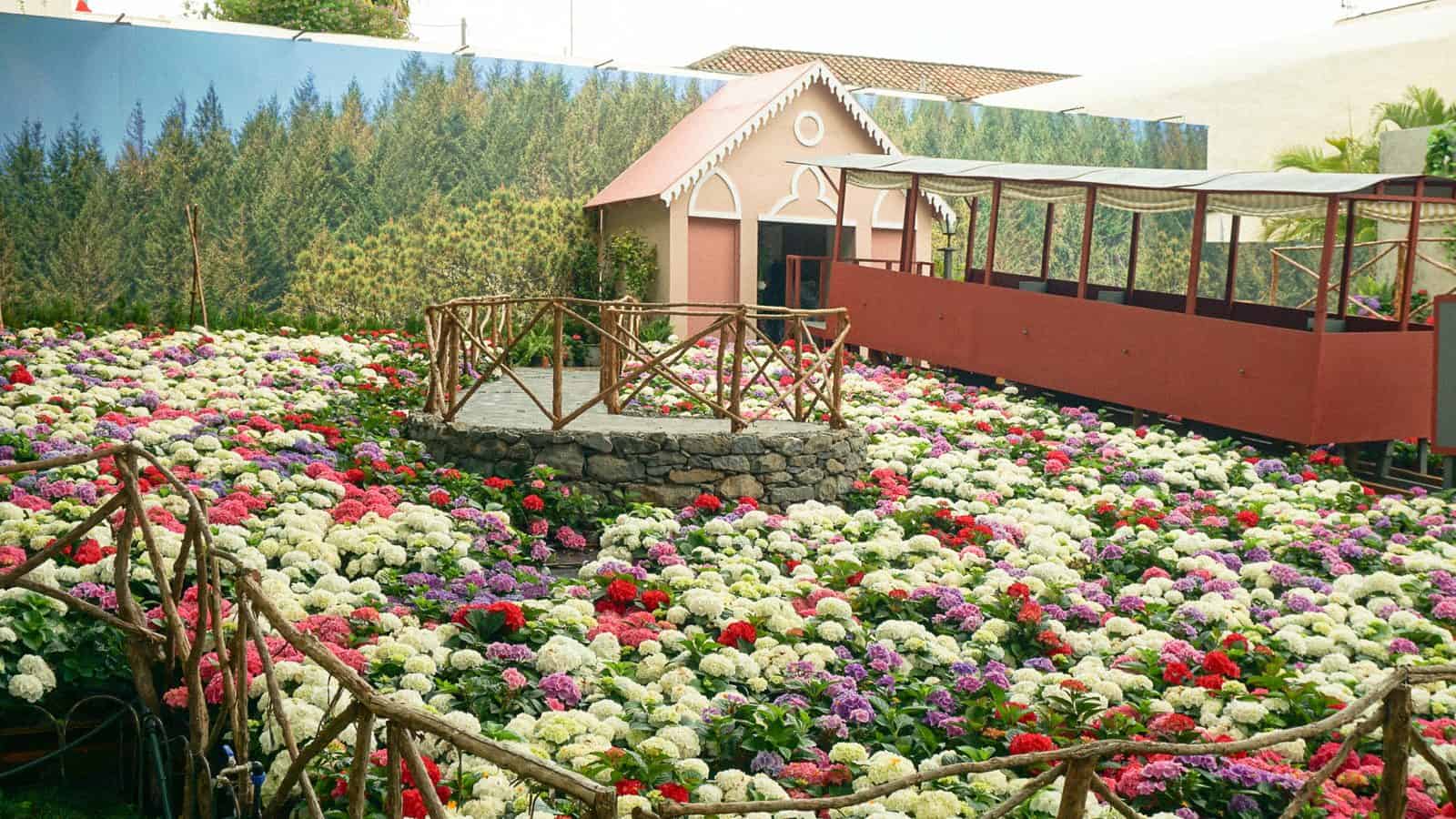
What I liked most was that it was not confined to a parade route. You would turn a corner on an ordinary street and find another arrangement someone had built that morning, in front of a doorway or under a tiled panel, entirely for the pleasure of it.
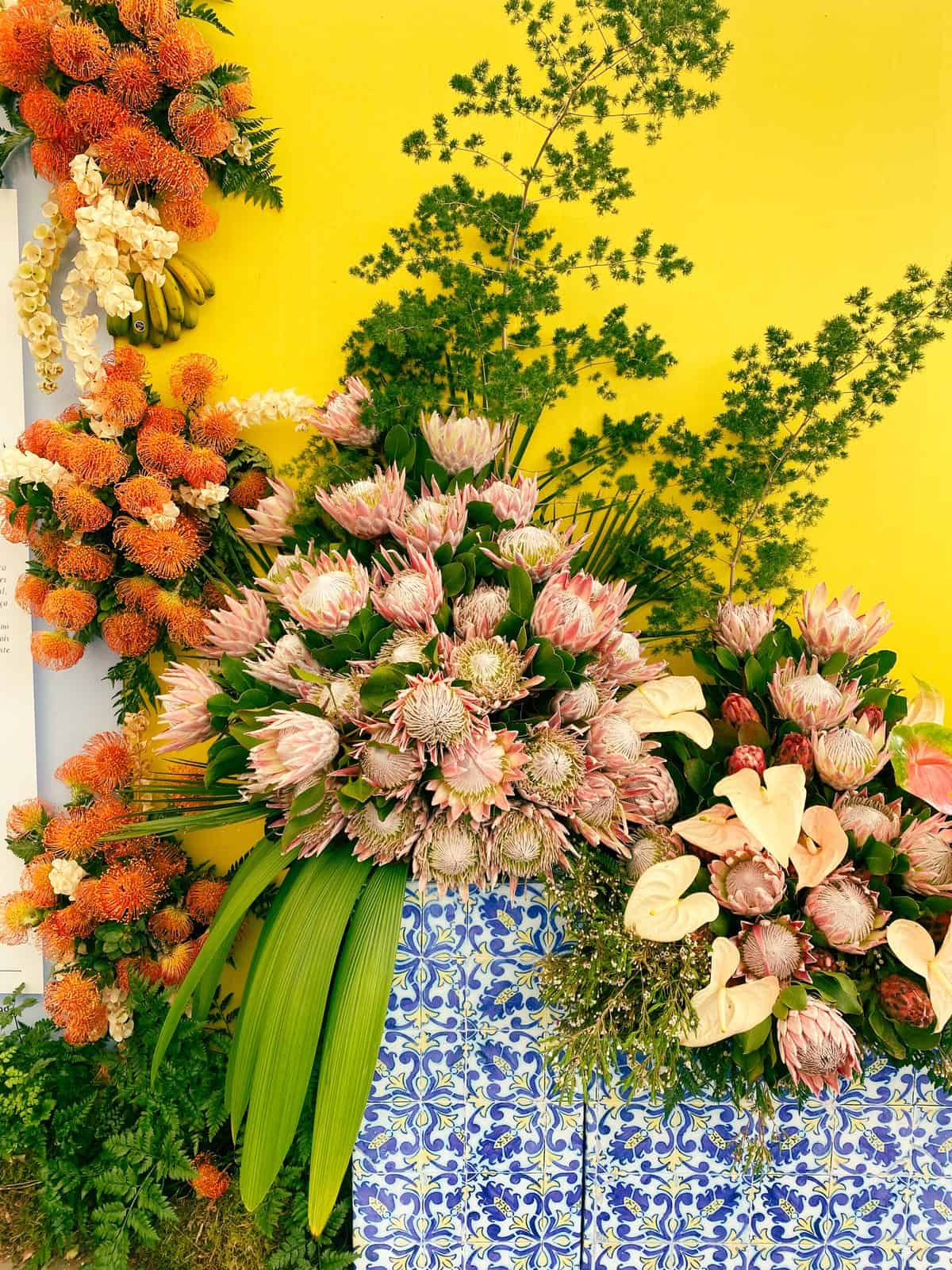
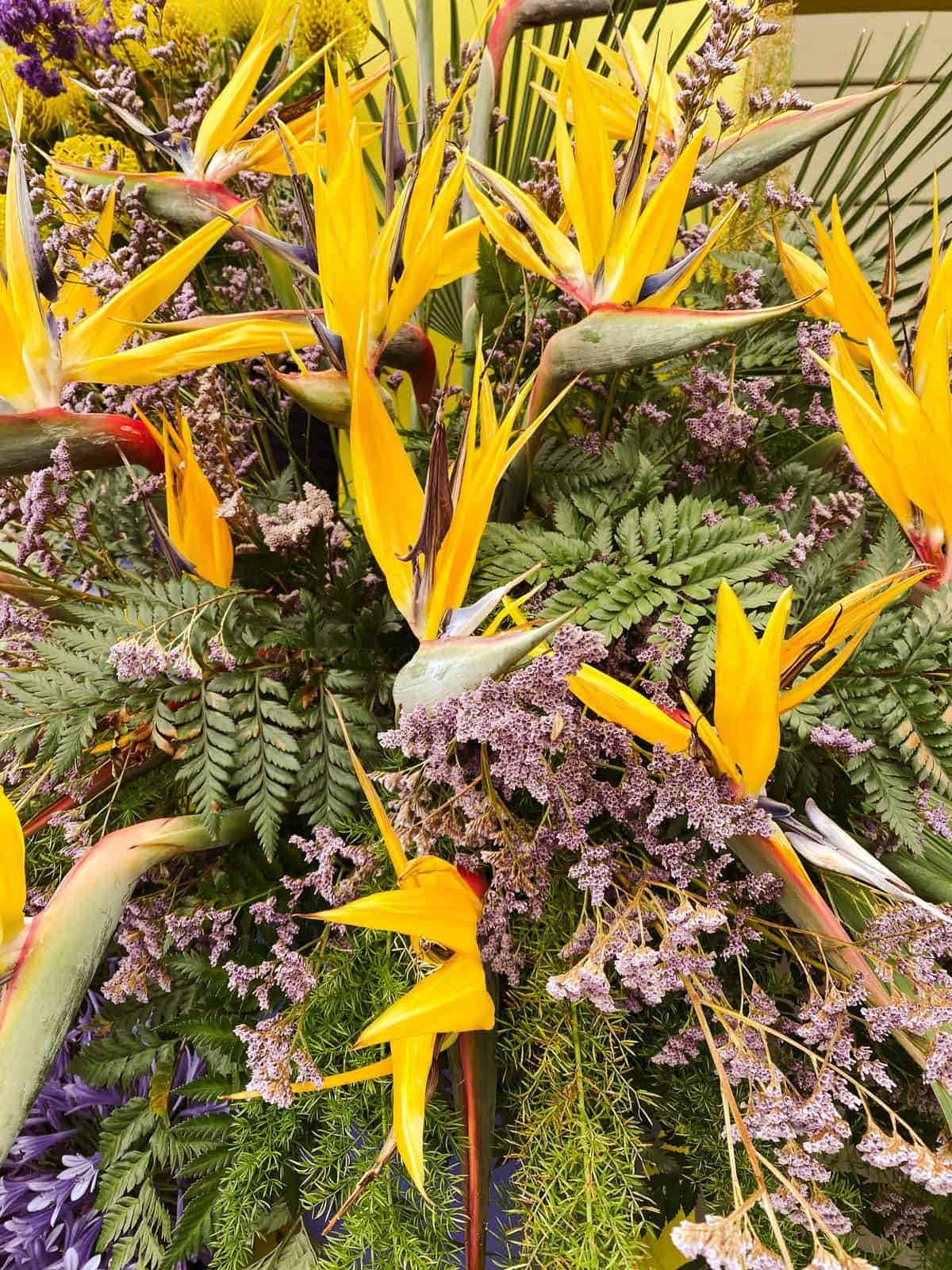

The festival falls in spring, but the dates shift each year because they follow Easter, so check them before you book flights. If your week lands on it, give Funchal an extra half-day — this is the one part of the itinerary I would happily slow down for.
Allow: one unhurried day, or a day and a half during the Festa da Flor
Driving: not needed — collect your hire car tomorrow morning and save a night of city parking
Day 2: The wild eastern peninsula
The landscape changes completely at Madeira’s eastern tip. Ponta de São Lourenço is dry, bare and windswept, all ochre cliffs and red rock, with the Atlantic on both sides of you at once. After the green interior, it barely looks like the same island.
The PR8 trail along the peninsula is the walk to do, and it is a morning job: allow around three hours there and back, and set off early. There is almost no shade, the wind can be fierce and the heat makes the distance feel longer than it is. Take more water than you think you need. If you would rather not commit to the whole route, the first two viewpoints already deliver the drama.

Afterwards, cool off at Prainha, the island’s small natural dark-sand beach, or drive on to Caniçal for lunch. The town’s whaling museum is a surprisingly thoughtful stop, covering both the industry that once sustained the village and the conservation work that replaced it.
Spend the afternoon in Machico, where Portuguese settlers first came ashore in the fifteenth century. Its imported golden-sand bay is one of the gentlest swimming spots on the island. On the way back to Funchal, stop at Cristo Rei in Garajau for a last clifftop view over the south coast.
Suggested route: Funchal → Ponta de São Lourenço → Caniçal → Machico → Garajau → Funchal
Without a car: book an east-island tour, or arrange a hiking transfer to the PR8 trailhead
Day 3: Peaks, laurel forest and the traditional north-east
Today belongs to the mountains — but let the forecast decide how it unfolds. Pico do Arieiro, at 1,818 metres the island’s third-highest peak, can be a sea of cloud lit gold at sunrise, and completely socked in an hour later.
I know this because we did not get the view. We set off for Arieiro in poor weather, hoping it would clear the way mountain weather sometimes does, and turned back instead: cloud down to the road, nothing visible beyond the barrier, and no sense in continuing. It is the one thing I would change about our week, and the reason this itinerary keeps saying the same thing — put the mountain day early, so you have days left to try again.
Always check the real-time summit conditions on the NetMadeira webcams before you head up the mountain. There is a camera pointed at Arieiro itself, updating through the day, and it will tell you in about five seconds what the island forecast cannot: whether there is anything up there to see. I wish we had. It would have saved us the drive, and we would have gone back on a better morning instead.
You do not need a serious hike to appreciate Arieiro, either. The viewpoint beside the car park gives you the full sweep of the central massif on a clear day — which is exactly why it is worth waiting for one.
If you plan to walk any of the high ridge route towards Pico Ruivo, check the official trail status the night before and again that morning. Sections close regularly, booking and access arrangements have changed in recent years, and this is not a route to improvise on.
Honest trade-off: sunrise at Arieiro is the shot everyone wants, which means a full car park and a queue at the railing. If it is the view you are after rather than the sunrise itself, a clear late afternoon is calmer — and much easier to rearrange at short notice.
Drive down to Ribeiro Frio, deep in the Laurisilva forest, for the Vereda dos Balcões — a short, gentle, mostly level walk to a natural balcony above the valleys. It is the best low-effort viewpoint on the island and a perfect substitute when the high trails are closed, though cloud can hide the peaks here too.
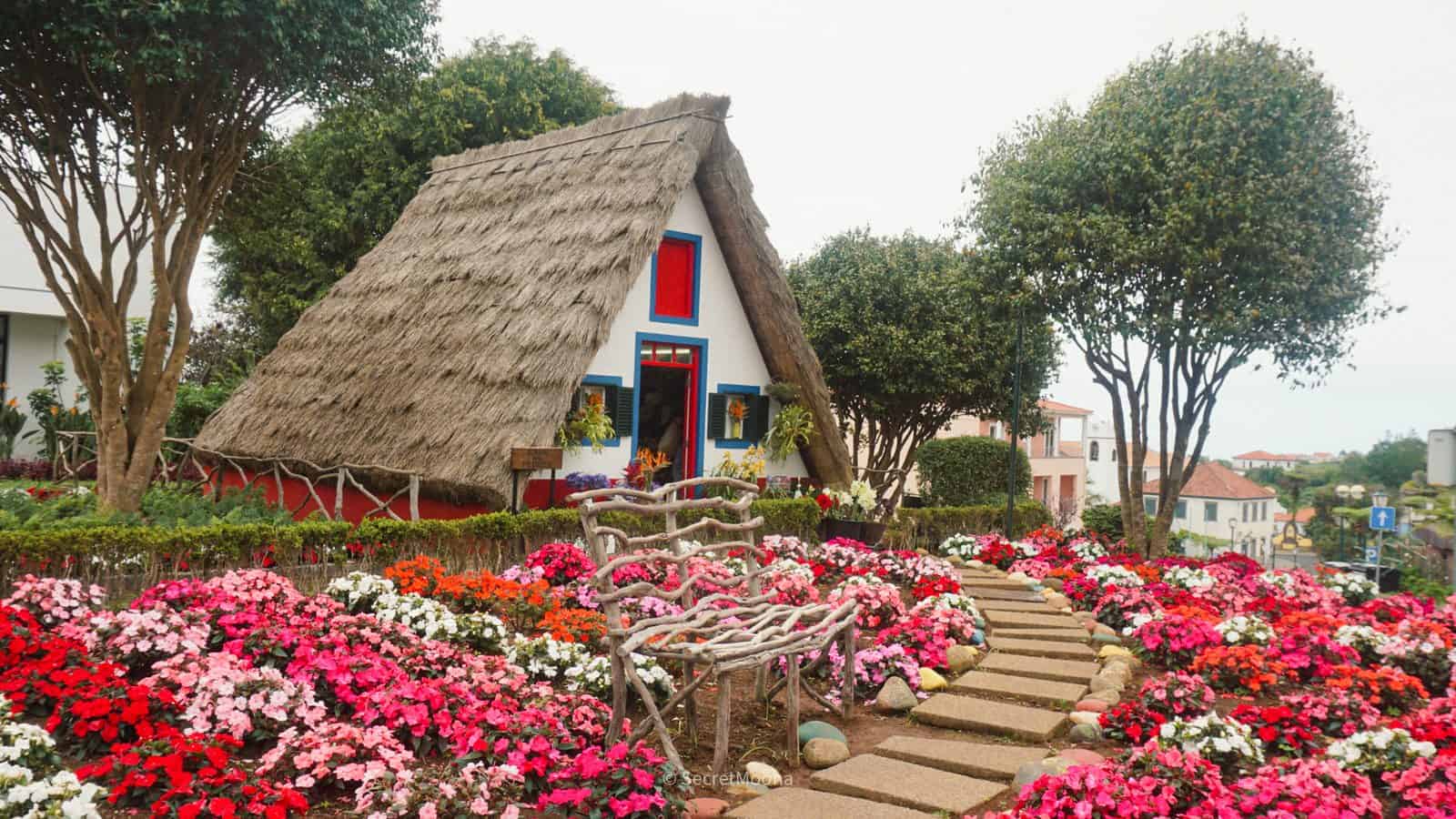
In the afternoon, continue north to Santana and its triangular thatched houses. The ones in the centre are display pieces rather than a hidden discovery, but they are colourful, they photograph beautifully and they explain a genuine piece of Madeiran architecture. If the light is still good, add the glass platform at Miradouro do Guindaste near Faial, or the Rocha do Navio viewpoint above Santana, before the drive back.
Suggested route: Funchal → Pico do Arieiro → Ribeiro Frio → Santana → Faial → Funchal
Day 4: Road trip along the wild north-west coast
The north coast is the part of Madeira that stayed with me most. It is greener, moodier and more rugged than the south, with mountains dropping almost straight into the ocean and waterfalls landing beside the road.
Start in São Vicente, a tidy little town wedged between steep green slopes — walk the cobbled centre and the church square before following the coast west. Stop at the Véu da Noiva viewpoint on the way for the classic north-coast panorama.
Seixal is the one I would build the day around. Its black-sand beach, backed by lush cliffs and thin ribbons of waterfall, is among the most photogenic places on the island, and there is a natural pool alongside it. The Atlantic here is powerful, so only get in when conditions are obviously safe.
Continue to Porto Moniz and its natural swimming pools, formed by lava and refilled by the sea. There is a managed complex with facilities and a wilder set of rock pools next door. Even when the swell is too big for swimming, watching the waves break over black rock is worth the drive — we arrived late in the afternoon, with the light going soft on the water and most of the day-trippers gone.

From Porto Moniz, climb inland to Fanal, where ancient, twisted til trees rise out of the mist on a high plateau. This is the one I did not manage to fit in, and the first thing on my list for next time — the photographs of those trees in fog are the reason half of us end up booking a flight to Madeira in the first place. If you go, remember that the fog which makes it beautiful also cuts visibility on the road: drive slowly, and watch for the cattle that graze loose up there and are exactly the colour of the murk.
Return over the high plateau of Paul da Serra, or make this an overnight stop in the north-west if you would rather slow the week down.
Suggested route: Funchal → São Vicente → Seixal → Porto Moniz → Fanal → Paul da Serra → Funchal
Read first: Driving in Madeira: tips, road conditions and car-hire advice

Day 5: A levada walk around Rabaçal
No week in Madeira is complete without walking beside a levada. These narrow irrigation channels were cut across the island to carry water from the wet north to the dry south, and the maintenance paths beside them now lead into forests, valleys and waterfalls that no road reaches.
The Rabaçal area holds the most famous of them. PR6 Levada das 25 Fontes follows the channel through laurel forest to a green amphitheatre of rock threaded with waterfalls. PR6.1 Levada do Risco is shorter and often combined with it, while Lagoa do Vento adds a steeper, quieter extension for anyone with the legs for it.
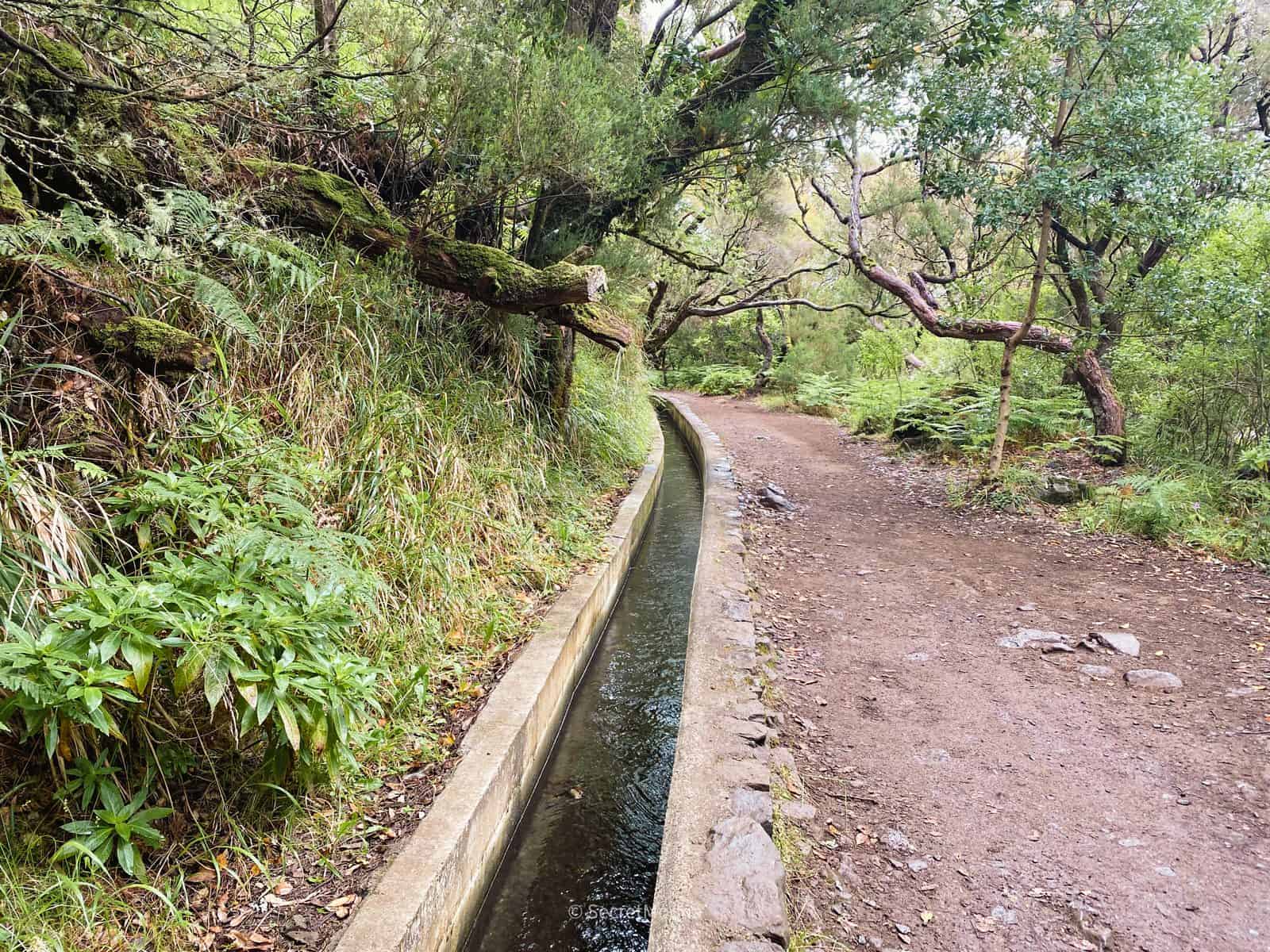
Popularity is the trade-off. Start early, avoid weekends if you possibly can, and expect company at the falls. Wear shoes with grip — the paths are damp, narrow and unfenced in places — and bring a light waterproof, because the north side makes its own drizzle. Carry a torch if your chosen route includes tunnels.
One firm piece of advice: do not rely on an old blog post for access details, mine included. Parking, the shuttle down to Rabaçal, booking systems and fees have all changed in recent years. Check the official Madeira trail portal in the days before you go.
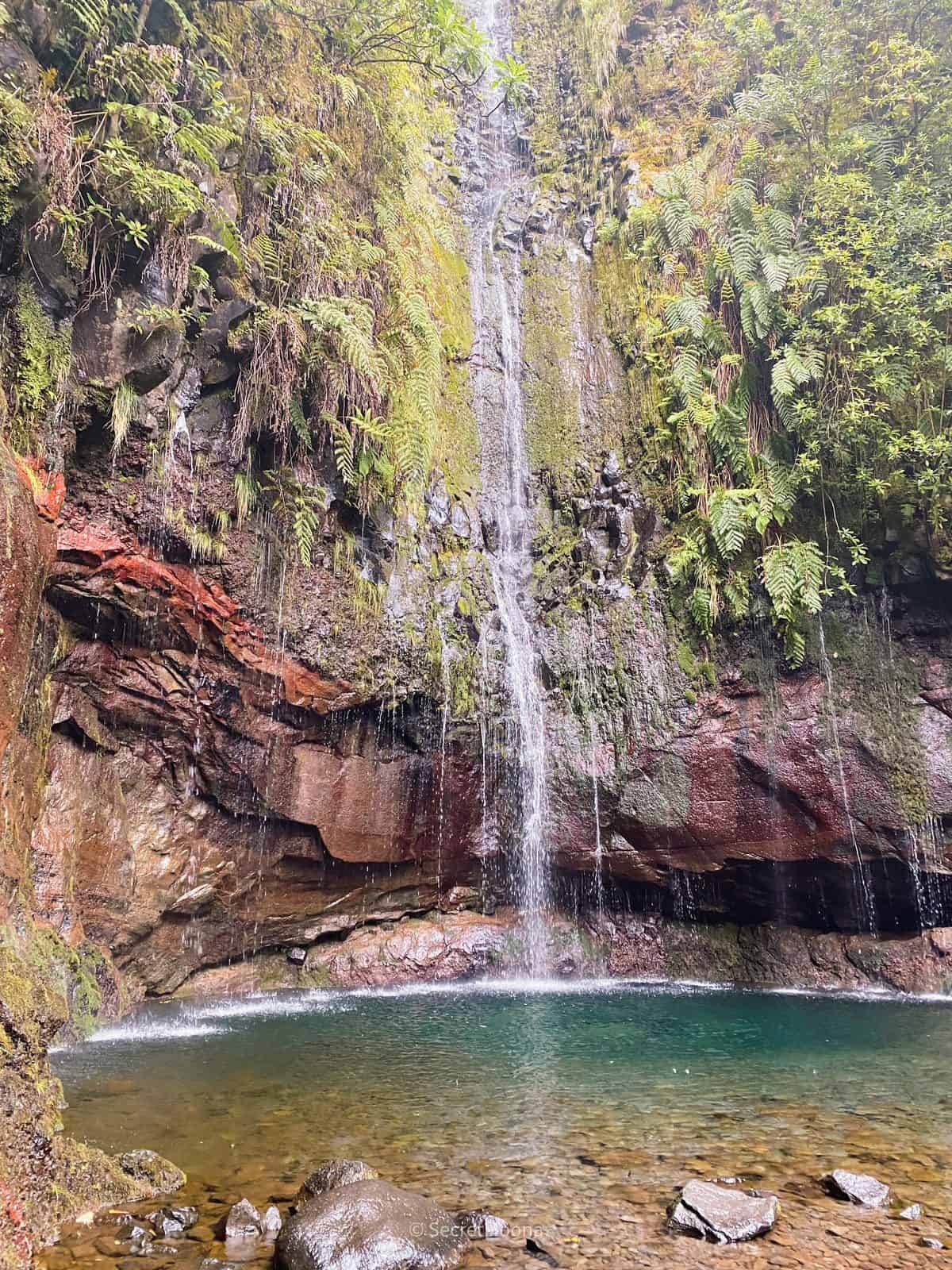
Afterwards, drop down to Calheta for a late lunch and a rest on its sheltered imported-sand beach. If you still have energy, stop in Ponta do Sol on the way back — the waterfront is at its best in late-afternoon light.
Not a keen walker? Swap the long trail for a gentle section of levada near Ribeiro Frio, spend the day in Calheta and Ponta do Sol, or book a guided walk whose leader can pick a route to suit the day’s conditions.
Day 6: Slow down on the sunny south-west
This day has fewer fixed attractions and more time for villages, food and viewpoints — the kind of travel I enjoy most, and the reason I would never cut it from the week.
Start in Câmara de Lobos, the fishing town just west of Funchal where the poncha tradition began. Painted boats fill the harbour and steep lanes climb behind it. If you are driving, save the tasting for the evening: poncha is far stronger than it tastes.

Next, Cabo Girão, one of the highest cliff skywalks in Europe. Its glass floor looks straight down to the fajãs — the tiny cultivated terraces at the bottom of the cliff, still farmed and reached by cable car. Go early if you want space to enjoy it.

Then head west and choose two or three of these, rather than trying to collect them all:
- Ribeira Brava for its seafront and compact historic centre
- Ponta do Sol for colourful buildings and a relaxed waterfront
- Madalena do Mar for a walk through the banana plantations
- Jardim do Mar for narrow lanes and big Atlantic views
- Paul do Mar for a drink beside the sea
- Ponta do Pargo for open landscapes and a west-coast sunset
Jardim do Mar rewards a slow wander in particular. Leave the car above the village — the centre is far too tight for it — and walk down through the lanes to the promenade. Finish at Ponta do Pargo and its lighthouse if the sky is clear, remembering that the drive back to Funchal will be in the dark.

Suggested route: Funchal → Câmara de Lobos → Cabo Girão → Ponta do Sol → Jardim do Mar → Ponta do Pargo
Slow-travel version: stop at Jardim do Mar and save the far west for another trip
Day 7: Monte gardens and the Atlantic
Keep the last day loose. It can absorb anything the mountain weather stole earlier in the week, and staying near Funchal makes the flight home simpler.
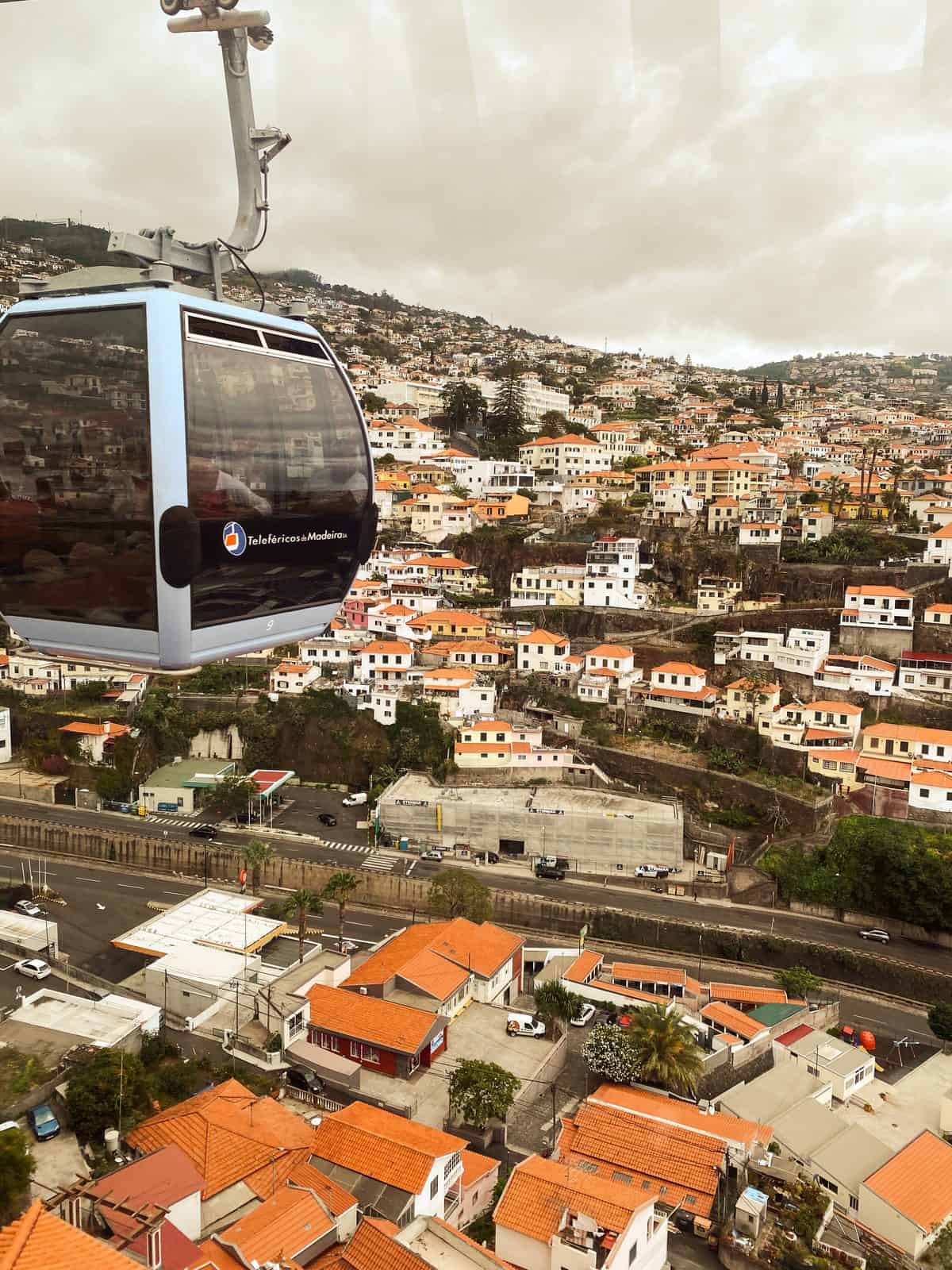
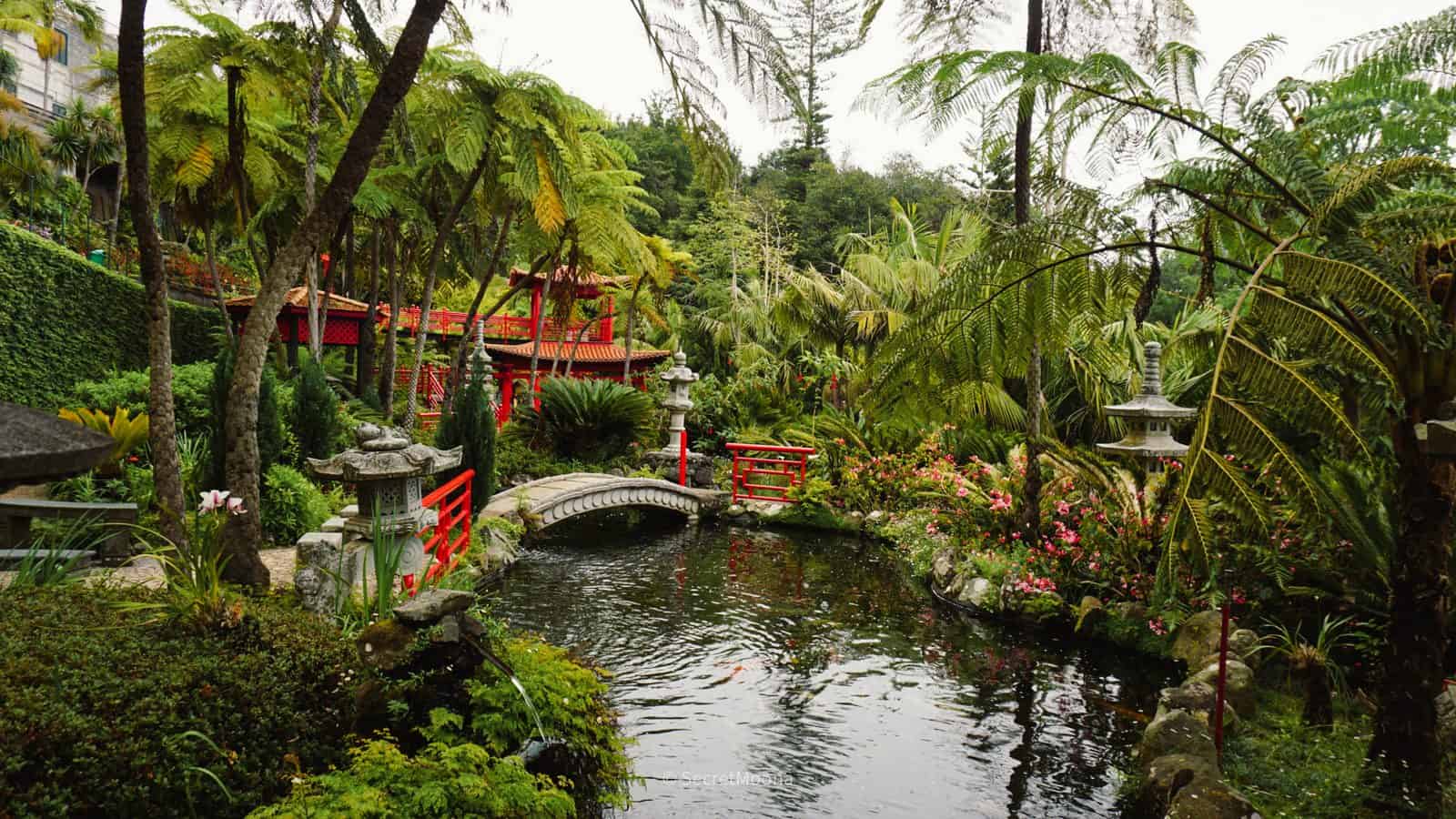
For a garden morning, take the cable car from the Old Town up to Monte Palace Tropical Garden. The grounds combine subtropical planting, koi ponds, azulejo panels and an oriental garden, with views back down over Funchal Bay. Give it two hours at least — rushing through to make the next activity rather misses the point of it.
From Monte, the wicker toboggans are the theatrical way down: two carreiros in white with straw boaters, steering a wooden sledge down a public road with their boots. It is unashamedly touristy and good fun. Just know that the ride ends partway down, not in the centre, so you will need a taxi, a bus or a 30-minute walk to finish the journey.

The alternative is to spend the morning at sea. Whale and dolphin watching trips leave from Funchal marina year-round, and operators here are plentiful and competitively priced — look for one that follows the responsible-viewing code rather than the cheapest ticket. Sightings are never guaranteed, which is exactly as it should be with wild animals, but even a quiet trip gives you Madeira’s cliffs from the angle they were meant to be seen from. Skip it if you are prone to seasickness; the Atlantic swell is real.
Finish with a last walk along the promenade, a poncha somewhere unhurried, and dinner built around whichever dish you liked most this week.
Where to stay for a week in Madeira
For a first visit, Funchal is the most practical single base. It has the widest choice of hotels and restaurants, the best transport links, and almost the whole island within day-trip range. Stay near the centre or Zona Velha if you want to walk to dinner; look towards the Lido promenade for resort facilities and sea access.
We stayed at the Meliá Madeira Mare, over on the Lido side of Funchal, and it was a great option for a week like this one: comfortable enough to come back to after a long day of driving, a short walk from the Lido promenade, and close enough to the centre that you are never committed to eating at the hotel.
Two alternatives are worth considering:
- Split the week between Funchal and the north-west. Two nights around São Vicente or Porto Moniz cuts the longest drive of the week in half, and the north is a different place once the day-trippers have gone home.
- Base yourself in Ponta do Sol or Calheta. These sunnier south-west towns suit a slower, more scenic trip, though restaurants and buses are noticeably thinner on the ground than in Funchal.
Do you need a car in Madeira?
Not for Funchal, and not if you are happy on organised tours — east- and west-island day trips cover most of the stops in this itinerary. But for this route specifically, hiring a car for four or five days gives you something tours cannot: the freedom to chase the weather, leave at first light and stop wherever the view demands it.

The main roads and via rápida are excellent. What catches people out is the gradient — some village streets are steep enough to need first gear both ways — and the assumption that the shortest line on the map is the fastest. Choose a small car with enough engine for the hills, and add time to every estimate. My full guide to driving in Madeira covers parking, tunnels, road conditions and what to expect behind the wheel.
If you would rather not drive, base yourself in Funchal and combine buses with small-group tours and dedicated hiking transfers. It takes more planning, but it removes the two things visitors find most stressful here: the hairpins and the parking.
Practical tips for planning a week in Madeira
Build the week around the forecast
Check the NetMadeira webcams every morning, not just the weather app — there are live cameras at Pico do Arieiro, Rabaçal, Porto Moniz and a dozen other spots, and they show you conditions as they actually are. Keep the mountain and levada days interchangeable, and always have a lower-altitude plan B: the south coast is often sunny when the peaks are lost.
Check trail status before every walk
Official trails close for fires, landslides, maintenance and weather, and access rules have changed repeatedly in recent years. Consult the official Madeira trails information shortly before setting out, and respect barriers even when other walkers are stepping past them.
Pack for several seasons in one day
Layers, a waterproof and proper walking shoes alongside swimwear and sun cream. A torch earns its place in levada tunnels, and a reusable bottle and small daypack will be used every single day.
Don’t underestimate journey times
The island is small and slow. Photo stops, hairpins, tunnels and cloud all add up, and one region per day is a far better rhythm than zigzagging across Madeira chasing a checklist.
Make the food part of the plan

Bolo do caco, espetada, black scabbard fish with banana, grilled limpets, milho frito and a table of tropical fruit you cannot buy at home. Madeira wine and poncha are the drinks to try — and poncha, again, is stronger than it tastes. See my guide to 12 traditional Madeiran dishes.
How to adapt this Madeira itinerary
If you would rather not hike
Keep Ponta de São Lourenço to its first viewpoints, enjoy Pico do Arieiro from the car-park viewpoint, and replace the Rabaçal day with Calheta, Ponta do Sol and a short accessible stretch of levada. A guided 4×4 tour reaches the mountain scenery without the walking.
If hiking is your priority
Use day 7 as a second walking day, but choose a different landscape rather than repeating one — the Caldeirão Verde levada in the north-east, for example. Don’t schedule two demanding hikes back to back without weighing up fitness, weather and trail conditions.
If you only have five days
Combine Funchal and Monte into one day, keep either the mountain day or the levada day, and choose the east and north-west road trips. Drop the south-west day, or fold Câmara de Lobos and Cabo Girão into the drive back from Rabaçal.
If you have ten days
Add a night in the north, a second levada walk and a day trip to Porto Santo for its long golden beach. The extra time also means you can wait for a clear day for the mountains instead of gambling one.
More Madeira guides
Use these to fill in the detail of each day:
- 15 things to do in Madeira, Portugal
- Driving in Madeira: tips, road conditions and car-hire advice
- Madeira food guide: 12 traditional dishes you must try
- One week in Portugal: the perfect itinerary
Madeira itinerary FAQ
Is seven days enough for Madeira?
Yes. Seven days is enough for a first-time visitor to see Funchal, the eastern peninsula, the mountains, the north-west coast and at least one levada walk, all from a single base. You will not see everything — no one does in a week — but you will experience every one of the island’s landscapes without changing hotels constantly.
Do I need a car for one week in Madeira?
A hire car gives you the most flexibility, especially for trailheads, mountain viewpoints and the north-west coast, and four or five days is usually enough. If you would rather not drive, stay in Funchal and combine buses with organised east- and west-island tours and dedicated hiking transfers.
Where is the best place to stay for a first trip to Madeira?
Funchal is the easiest all-round base, with the best choice of hotels, restaurants and tour departures, and most of the island within day-trip reach. Splitting the week with two nights in the north-west around São Vicente or Porto Moniz makes for a slower trip and shortens the longest drive.
What is the best month to visit Madeira?
Madeira is a year-round destination thanks to its mild subtropical climate. Spring is the most colourful — and the season of the Festa da Flor — while summer is the driest and busiest, and autumn often brings comfortable walking weather with fewer visitors. Mountain conditions change quickly whatever the month, so pack layers whenever you go.
When is the Madeira Flower Festival?
The Festa da Flor takes place in Funchal in spring, usually a few weeks after Easter, so the exact dates move each year and are worth checking before you book. Expect flower carpets and arrangements throughout the city centre, a children’s ceremony, folk performances and a main parade. Book accommodation early if your trip falls during it.
Can I follow this Madeira itinerary without hiking?
Yes. Enjoy Pico do Arieiro from the viewpoint beside the car park, walk only the first section of the PR8 trail at Ponta de São Lourenço, and swap the Rabaçal levada day for gardens, villages and a guided scenic tour. The short Vereda dos Balcões at Ribeiro Frio is gentle enough for most people and still gives you the forest and the view.
Is Madeira expensive?
Madeira is one of the better-value destinations in western Europe. Local restaurants, buses and museum entry are inexpensive, and a hire car is generally cheaper than on the mainland. The costs that add up are guided tours, boat trips and fruit bought at Mercado dos Lavradores, where prices are aimed squarely at visitors.
Final thoughts on a week in Madeira
Madeira’s appeal is not one headline sight. It is the contrast: a bright harbour in the morning and a forest full of fog by lunchtime, manicured gardens on one coast and cliffs that feel completely untamed on the other. A week is long enough to see all of those sides and still leave room for the unplanned.
So use this as a framework rather than a timetable. Swap the days when the cloud comes down — we lost Pico do Arieiro to it and I would plan differently next time — stay longer in the village that catches you off guard, and accept that you will not see it all. Fanal and a clear morning on the ridge are already on my list for the next trip. Madeira has a habit of sending people home already planning the next trip — and leaving something for next time is no bad thing.
Like this? Pin for later
Save this Madeira itinerary for later
Trips like this one are rarely planned in a single sitting. Pin whichever of these you prefer and the whole week will be waiting for you when you come back to it.


Related Posts:




Madeira looks like an incredible island for a road trip! I love how this itinerary balances hiking, dramatic coastal scenery, mountain viewpoints, villages, and time in Funchal. The advice to keep plans flexible around the mountain weather is especially helpful.
Madeira is at the top of my list of future travel destinations because this island looks amazing. Thanks for this great itinerary.